Author: codycharnell

  • 1031 Exchange Extension For Those Impacted By LA Wildfires

    1031 Exchange Extension For Those Impacted By LA Wildfires

    **Disclaimer- We are not tax professionals so please do not interpret this as tax advise! Please confirm all information with a trusted tax professional!**

    The recent wildfires sweeping through Los Angeles have left devastating effects on the community, displacing families, disrupting businesses, and causing immense financial strain. For individuals and businesses engaged in 1031 exchanges (like-kind exchanges), these challenges are further compounded by the tight deadlines inherent to the process. To provide some relief, the IRS has implemented disaster relief provisions, offering extensions on key deadlines to help taxpayers navigate this difficult time. Here’s what you need to know.

    Taxpayers involved in 1031 exchanges (like-kind exchanges) who are considered affected taxpayers may receive additional time to complete their exchange under the disaster relief provisions outlined by the IRS.
    Here’s how this applies:
    1. Who Qualifies for Relief:
      • Taxpayers directly affected by a federally declared disaster and living or operating a business in a covered disaster area qualify.
      • Taxpayers outside the disaster area but whose necessary records are located within the covered area also qualify.
      • Relief workers and certain individuals impacted by the disaster may also qualify.
    2. Extension for Time-Sensitive Acts:
      • Under Treas. Reg. § 301.7508A-1(c)(1) and Rev. Proc. 2018-58, affected taxpayers are granted additional time to complete time-sensitive acts, including the deadlines related to 1031 exchanges:
        • The 45-day identification period to identify replacement property.
        • The 180-day exchange period to complete the exchange.
      • The extensions apply to acts required to be performed on or after Jan. 7, 2025, and before Oct. 15, 2025. For affected taxpayers, these deadlines are postponed until Oct. 15, 2025.
    3. Specific Considerations for 1031 Exchanges:
      • If the original deadlines for identifying replacement property or completing the exchange fall within the disaster relief period, the deadlines are automatically extended until Oct. 15, 2025 for eligible taxpayers.
      • Taxpayers must check whether their transaction qualifies under section 17 of Rev. Proc. 2018-58, which addresses like-kind exchanges during disaster relief periods.
    Key Takeaway: Affected taxpayers in a covered disaster area or meeting other eligibility criteria have additional time to complete their 1031 exchange, as long as the deadlines fall within the relief period. You should confirm your eligibility and the specific disaster designation affecting your area to ensure compliance with these extended deadlines.


  • AB 2579- Deadline Extension for Balcony Inspections in California

    AB 2579- Deadline Extension for Balcony Inspections in California

    Balcony Inspections in California

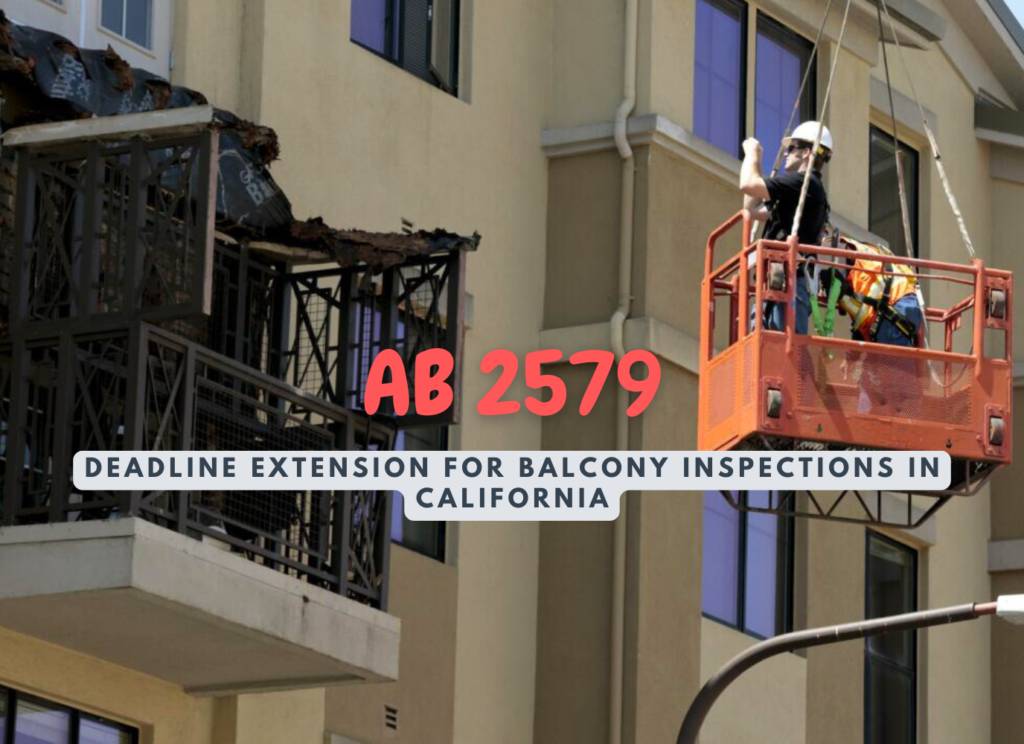
    In 2019, California passed AB 326 and SB 721, laws were mostly overlooked until recently as the deadline for inspections approached. These laws were enacted in response to several balcony collapses, particularly the 2015 incident in Berkeley that claimed six lives. SB 721 mandates that owners of apartment buildings with three or more units have their “exterior elevated elements” inspected by January 1, 2025, while AB 326 imposes similar requirements on condominium associations.

    (Berkley Balcony Collapse 2015)

    Although the laws were created with safety in mind, the timing of the inspection deadline has been challenging for property owners. Over the past few years, they’ve faced a perfect storm of financial burdens, including historic interest rate hikes, soaring material and labor costs, and skyrocketing insurance premiums.

    AB2579

    A new bill, AB 2579, aims to offer some relief by extending the inspection deadline from January 1, 2025, to January 1, 2026. This extension has already passed both the California House and Senate with unanimous approval. Lawmakers cited pandemic-related delays and a shortage of qualified inspectors as reasons for the extension. The bill now awaits Governor Newsom’s approval, with passage likely.

    For updates on the bill click here.

    Differences Between AB 326 and SB 721:

    AB 326 is similar to SB 721 but applies specifically to CIDs and HOAs, while SB 721 focuses on multifamily residential buildings, such as apartments.

    • AB 326 applies to condominium and other CID structures and requires HOAs to manage the inspection and repair process.
    • SB 721 applies to apartment buildings, with the responsibility placed on property owners rather than HOAs.

    Key Provisions SB 721:

    1. Scope of the Law:
      • SB 721 applies to buildings with three or more multifamily dwelling units.
      • The law is specifically concerned with “exterior elevated elements” that rely on wood for their support and are more than six feet above the ground. These elements include:
        • Balconies
        • Decks
        • Porches
        • Stairways
        • Walkways
    2. Inspection Requirements:
      • Inspection Timeline:
        Initial inspections must be completed by January 1, 2025, and subsequent inspections are required every six years.
      • Inspectors:
        Inspections must be carried out by a licensed professional, such as:

        • Licensed general contractors
        • Structural engineers
        • Architects
        • Certified building inspectors or other qualified professionals with relevant expertise in structural safety.
    3. Inspection Process:
      The law outlines what the inspections must include:

      • Visual inspections of load-bearing components, particularly looking for signs of water intrusion, decay, rust, or deterioration.
      • The inspector must evaluate the condition of the wood, the waterproofing systems, and any metal components (e.g., nails, screws, brackets) used in the construction.
      • Inspectors may need to conduct invasive inspections if necessary, such as removing parts of the structure to assess hidden damage.
    4. Documentation of Inspections:
      • The inspector is required to produce a detailed report, which includes:
        • The condition of each exterior elevated element.
        • Any required repairs or upgrades.
        • An assessment of whether the structure poses a threat to occupant safety.
      • The report must be submitted to the property owner within 45 days of the inspection.
      • If significant repairs are necessary, a copy of the report must be sent to the local building department.
    5. Repair Requirements:
      • Urgent Repairs:
        If the inspector determines that an exterior elevated element presents an imminent threat to safety, the property owner is required to obtain a building permit and complete the necessary repairs within 120 days.
      • Non-Urgent Repairs:
        If the inspection identifies deficiencies that are not immediately dangerous but still require attention, the owner must complete repairs within a reasonable timeframe as determined by the inspector and local authorities.
      • If repairs are not made within the required timeframes, local enforcement agencies may issue fines or pursue legal action.
    6. Enforcement:
      Local building authorities are responsible for enforcing compliance with SB 721.

      • Property owners who fail to complete inspections or repairs on time can face civil penalties.
      • Non-compliance could also result in additional inspections or enforcement actions by the local building department.
    7. Penalties for Non-Compliance:
      • Property owners who fail to meet inspection or repair deadlines may be subject to civil penalties of up to $500 per day for each violation, starting 30 days after the owner receives notice from the local enforcement agency.
      • Local building departments have the authority to initiate legal proceedings against owners who do not comply with the law.
    8. Liability:
      SB 721 places the responsibility of compliance on the property owners. By enforcing mandatory inspections and repair timelines, the law helps limit legal exposure for owners in cases where structural failures occur, provided the inspections and repairs were carried out in accordance with the law.


    Read the full bill text Here: AB 326 & SB 721


    Need a referral for a balcony inspector? Reach out to us today!

  • Big Changes to Long Beach Section 8- 2024

    Big Changes to Long Beach Section 8- 2024

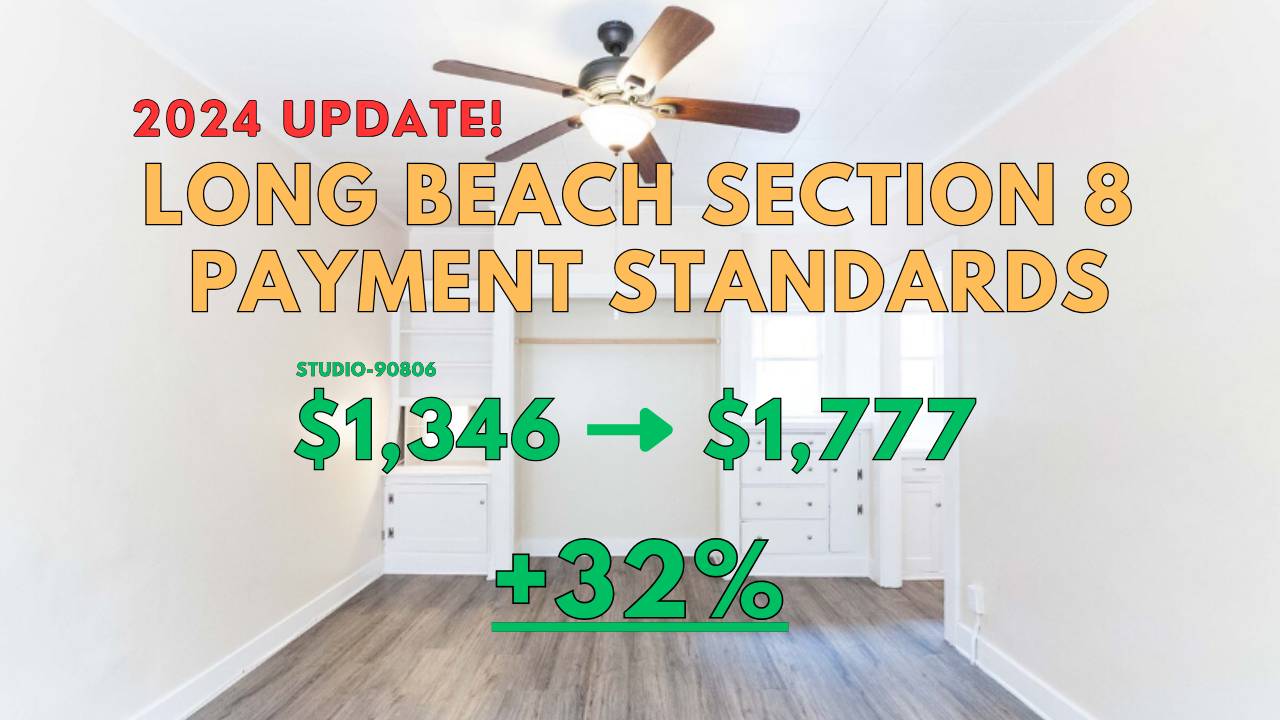
    Long Beach Housing Authority Recently Published Updated Payment Standards & Announced Improved Processes For Property Owners

    Watch the Video:

    In this video I sit down with Mechell Roberts (From Long Beach Housing Authority) and Cristina Garcia (Property Manager) and we discuss the big changes that section 8 is rolling out for 2024.

    Contact Info:

    Mechell Roberts- Long Beach Housing Authority: 562-570-6985, https://www.longbeach.gov/haclb/owners-and-agents/

    Cristina Garcia- Heart Property Management: (562)270-4253, https://www.heartpmg.com/

    Updated Payment Standards

    On October 1st, the Long Beach Housing Authority updates payment standards for section 8 housing participants. The payment standards are broken down by bedroom count in each zip code. It’s important to note that the published payment standards aren’t necessarily the rents that you will receive if you rent to a Section 8 participant. There are 2 calculations that the Housing Authority will complete prior to giving owners a final rent number. 1) Rent Reasonableness Calculation 2) Tenant Assistance Estimator Calculation

    What is The Rent Reasonableness Calculation?

    The Housing Authority will use a third party to pull rental comps within 1 mile of a unit that a section 8 participant has applied for. The goal is to understand what non-section 8 tenants are paying for similar units. They will use the rental comps as the first factor to determine what the Housing Authority can offer an owner for rent. Once rental comps have been pulled, the Housing Authority will email the owner the rent offer and if the owner accepts they will move on to the second calculation in the process.

    The Housing Authority will make adjustments to the rent for extras like laundry, parking, storage, garages, etc. It’s important to note that the Housing Authority will not make adjustments for upgraded finishes in the unit. For example, upgraded counter tops, flooring, etc, will not result in a higher offer from section 8. However, these unit upgrades may help you attract tenants and fill your unit more quickly.

    The rent reasonableness calculation applies when a tenant applies for a unit and throughout the span of a tenancy. When an owner applies for rent increases, they will be subject to the rent reasonableness calculation and may be denied a rent increase if the new rent exceeds the rental comps in an area.

    What is the Tenant Assistance Estimator Calculation?


    The Housing Authority will typically pay a portion of a tenant’s rent and the tenant will be responsible for paying the balance.  The Assistance Estimator Calculation ensures that the tenant isn’t paying more than 40% of their adjusted monthly income towards rent.

    The Long Beach Housing Authority has a calculator, which will be posted on their website, that owners can use to understand this calculation. Alternatively, if a housing provider calls or visits a rental clinic someone at the Housing Authority office can walk them through this calculation. The housing authority may adjust their rent offer down if a prospective tenant would be paying more than 40% of their adjusted income towards rent.

    The Assistance Estimator Calculation only applies when a section 8 tenant is applying for a unit. The Housing Authority will not do the Assistance Estimator Calculation when rent increases are issued throughout the span of a tenancy.

    Section 8 Processing Times

    In the past it could take weeks or even months to go through the process to accept a section 8 applicant. The Long Beach Housing Authority has completely revamped this process and drastically reduced processing times. Once an owner turns in their packet (RAFTA) they can now schedule an inspection of the unit which will take place within 5 days.

    Additionally, the Long Beach Housing Authority is now hosting a weekly “Leasing Clinic.” Every Wednesday housing providers will be able to visit the Housing Authority Office and go through the application process. The Leasing Clinics will assist owners with submitting their RAFTA and the Housing Authority will run the Reasonableness Calculation and Tenant Assistance Estimator Calculation so they can provide a rent offer on the spot. If an owner wants to proceed with a rent offer, they can schedule a property inspection which will take place within the next 5 days.

    To speed up the process further, housing providers now have the option to pre register and do pre inspections. If an owner have an upcoming vacancy.

    Additional Owner Incentives

    The Long Beach Housing Authority is currently offer 2 different incentive programs to encourage housing providers to rent to section 8 participants.

    The Housing Authority is currently offering $2500 bonus incentives if a a housing provider rents a unit to a tenant that is on a preselected list. The list is comprised of families that are new to the section 8 program.

    If a housing provider rents a unit to a family that has been “previously unhoused” the housing provider can receive a $2500 bonus, the tenant will receive security deposit assistance, and there is a fund that will cover some damages to the unit (if any) when the tenant moves out.


    What Does the Housing Authority Look For During Inspections?

    The inspection process will be changing soon but for the most part the Housing Authority is inspecting the property for health and safety issues. The inspections take place before a voucher holder moves into a unit and every 2 years after a tenancy is established. Some items that come up frequently during inspections are:

    • Peeling and chipping pain (lead hazard)
    • Missing smoke detectors and carbon monoxide detectors
    • Deadbolt locks on bedrooms (fire safety issue)
    • Stove hoods must be clean and in good working order
    • All provided appliances must be fully functional (all stove burners working)
    • Chipped or damaged flooring (tripping issues)
    • All outlets need to be grounded
    • Window screens and window locks in good working order
    • No leaks, faucet drips, running toilets, or clogged drains
    • No rotting or damaged garage framing
    • Rotting or damaged stairs or decking
    • Laundry rooms clean, accessible, and ventilated
    • Doorbell must work if provided
    • Screen doors can’t be damaged
    • No pest control issues
    • Tripping hazards in common walkways
    • Overgrown yards or dumped items
  • Convert An ADU Into A Condo? AB 1033 Explained

    Convert An ADU Into A Condo? AB 1033 Explained

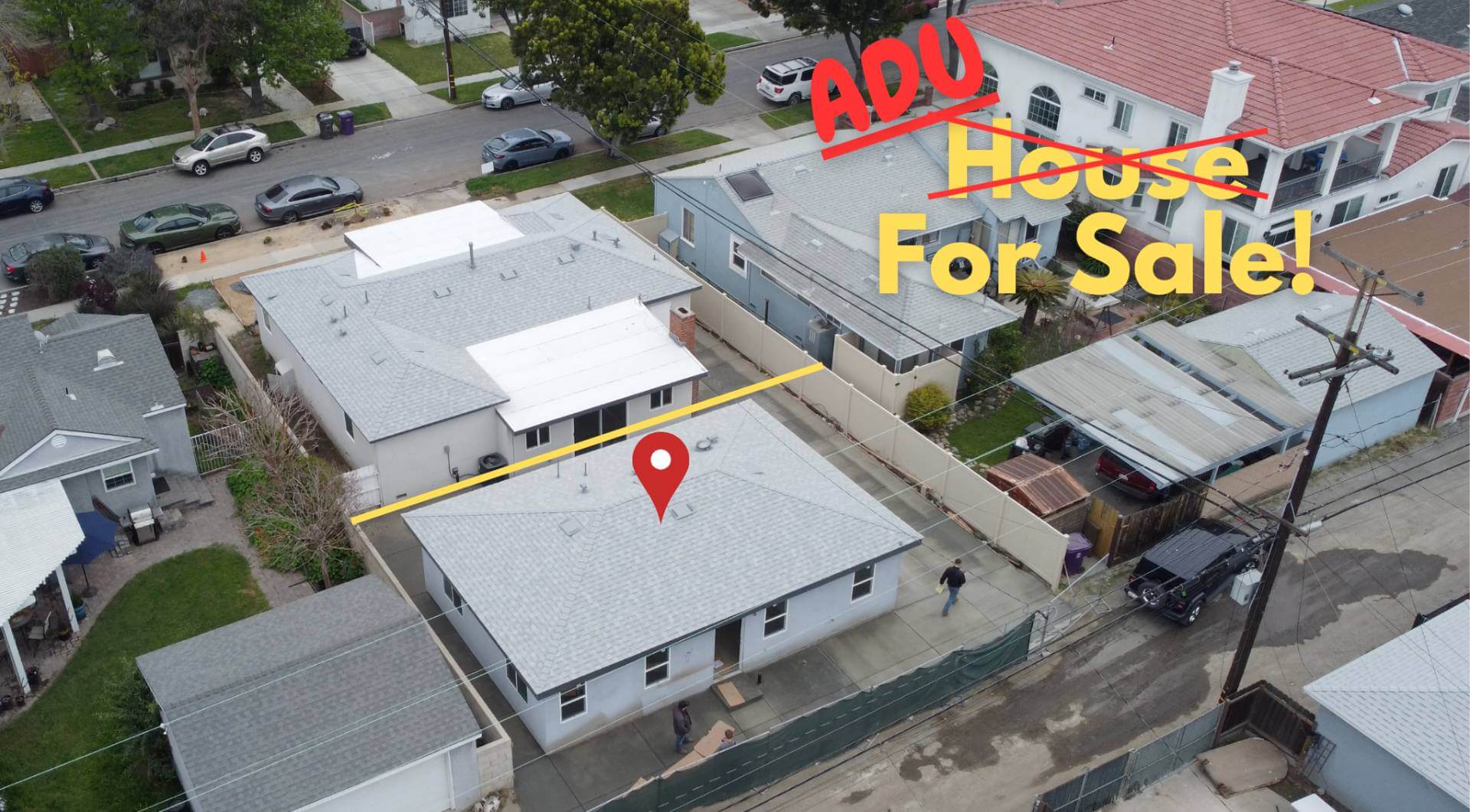
    Can You Now Convert an ADU into a Condo? AB 1033 ADU Explained

    Introduction

    Since their inception, existing law in California has prevented accessory dwelling units from being sold separately for a primary dwelling unit. While ADU’s can make a ton of financial sense as rental units that are accessories to a primary residence, there is significant benefit for investors and entry level home buyers if ADUs are allowed to be sold separately. State lawmakers recognized these benefits and CA AB 1033 ADU was born.

    What is Assembly Bill 1033 ADU?

    AB 1033 California is a bill that would allow the sale and condo-ization of accessory dwelling units built on residential property. The bill would allow individual cities and counties to pass laws to allow accessory dwelling units to be sold separately from a primary residence.


    What is Condo-ization?

    When you think of condos you may think of larger residential buildings that were built with the purpose of being sold off as individual condo units. In reality, condo’s are less of a specific type of construction and more of a form of co-ownership.

    Condo-ization is not a new concept. Looking back at previous real estate cycles we have seen many types of properties converted into condos. Here in Long Beach we have seen periods of time where apartment buildings that were built to rent have been converted into condos. Condo-ization involves taking a single property and allocating ownership of separate units to different owners. This allows two or more distinct parties to legally own discrete parts of the same property without having to subdivide the land.

    Condo-izing an ADU mean that one party owns the primary residence and another party owns the ADU and the two parties have co-ownership of the land and common areas which would be managed by an HOA. In this scenario the ADU is considered separate property from the primary residence and can be sold and financanced separately.

    While almost every property could be condo-ized, often state and local regulations prevent this from happening. AB 1033 would eliminate restrictions at the state level and give power to local governments to allow ADU properties to be condo-ized.


    What are the potential benefits of Condo-ization?

    It’s no secret that housing prices in CA are some of the highest in the nation and it can be incredibly hard for first time home buyers to enter the market. ADUs are one of the most cost-efficient ways for mom and pop developers to add new units to the market and gently increase the density of residential neighborhoods. Over the last several years ADUs have been built to rent, which helps to alleviate the shortage of rental units in CA. AB 1033 could open up a reservoir of reasonably priced housing for entry level home buyers. According to an article from Business Insider, over 63,000 ADUs were built in California between 2018-2021.

    AB 1033 would also have major benefits for current homeowners who could use the proceeds from the sale of the ADU to cover the cost of construction and leave them with nice profits without having to become landlords. A condo-ized ADU could also have potential to be financed separately from the primary residence.


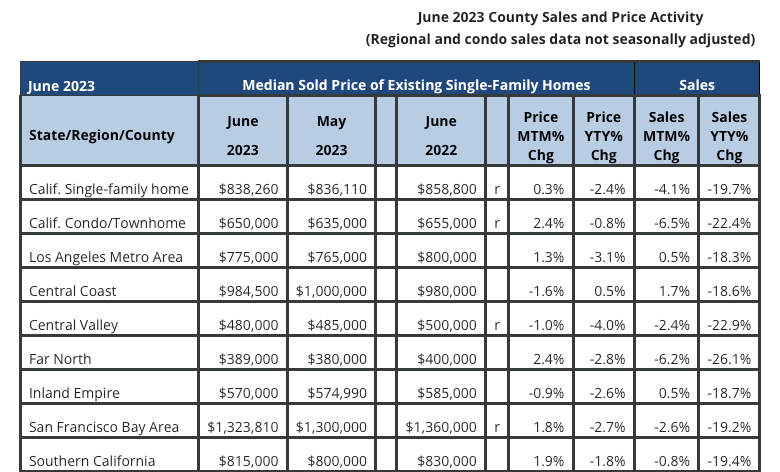
    According to data from the California Association of Realtors, the median price for a single family home in the LA Metro Area in June 2023 was $775,000 and the California median price for a condo or townhome came in at $650,000.

    ADU Condo-ization Outside of California

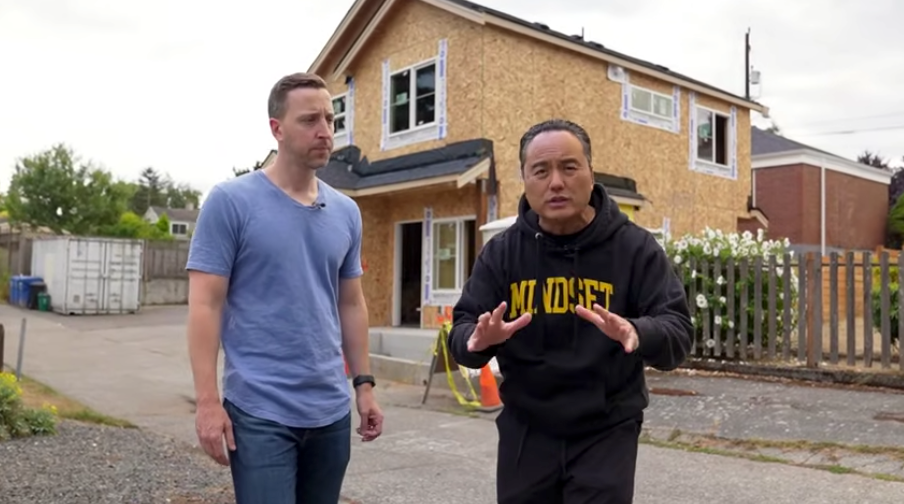
    Not only is AB 1033 realistic, but similar laws are already working in other parts of the US. Some notable markets where ADU condo-ization is taking place include Seattle, WA, Austin, TX, Portland, OR, and Princeton, NJ! Thatch Nugyen, a real estate developer and youtuber has been posting content about the benefits in Seattle Washington and has told investors in other states that condo-ization is the next logical step in markets where ADUs are already allowed. In a recent video, he highlights an ADU condo-ization project that one of his students completed and Thatch tells investors to get ready for laws like AB1033 to take effect and open up huge opportunities for mom and pop investors.


     AB 1033 Bill Progress

    As of September 11, 2023 the bill has passed in both the CA Senate and CA Assembly. The bill will be proofread and sent to the Governor for the final decision.  Track the bill progress here.


    Unlock New Investment Opportunities: ADU Sold Separately in California

    California’s new regulations on Accessory Dwelling Units (ADUs) present a game-changing opportunity for real estate investors. With the passage of Assembly Bill No. 1033, local agencies can now adopt ordinances allowing California sell ADU to be sold separately from the primary residence as condominiums. This opens the door to enhanced liquidity and flexibility, enabling investors to capitalize on the growing demand for affordable housing.

    By diversifying portfolios with separately owned ADUs, investors can maximize returns through individual sales or rental income streams. Whether you’re looking to expand your holdings or increase cash flow, this policy shift creates a new frontier for profitable investments in California’s thriving real estate market.

    Maximize Investment Potential with AB 1033 Ting

    Assembly Bill 1033 (AB 1033), championed by Assembly member Philip Ting, unlocks new opportunities for real estate investors in California. This groundbreaking legislation allows local agencies to adopt ordinances enabling the separate sale or conveyance of Accessory Dwelling Units (ADUs) as condominiums. For investors, this means increased flexibility and liquidity, as ADUs can now be sold independently from the primary residence, creating new revenue streams.

    Signed into law by Governor Gavin Newsom on October 11, 2023, and effective January 1, 2024, AB 1033 opens the door to higher returns while addressing California’s housing demand. This is the perfect time to capitalize on a booming market and diversify your investment portfolio.

  • How To Use A VA Loan To Buy A Multifamily Investment Property

    How To Use A VA Loan To Buy A Multifamily Investment Property

    What is a VA Loan?

    VA loans are a unique type of real estate loan that are offered to US Veterans, Service Members, and non-remarried spouses. The VA loan was created at the tail end of WWII and signed into law by Franklin D Roosevelt. The program offers Veterans a way to purchase a primary residence with 0% down. This is an incredible benefit that comes along with being in the US armed forces. The VA loan is one of the best residential loan products available with as little as 0% down, no mortgage insurance, and some of the lowest interest rates available. VA loans can be utilized on residential properties between 1-4 units. Many Veterans use the loan program as a way to jump start their multifamily investment portfolio.

     

    Benefits of VA financing

    No Down Payment

    One of the biggest VA home loan benefits is that there’s no down payment. As long as you qualify for the loan based on your credit score and debt ratios you can purchase up to a 4-unit property with no money down!

    No PMI

    VA loans also require no Private Mortgage Insurance (PMI), as many other loan programs do. Though VA loans do come with an upfront funding fee, the cost of this pales in comparison to mortgage insurance, which can cost you both at closing and monthly for the life of your loan. Investors who don’t have access to VA financing will need to pay monthly mortgage insurance on all qualified mortgages that allow less than 20% down. The absence of PMI saves VA buyers thousands of dollars per year! More info on VA funding fees can be found here.

    Lower Interest Rates

    The Department of Veterans Affairs guarantees VA loans, which means it will repay lenders for a portion of their losses should a borrower fail to make payments. This reduces the risk allows lenders to offer more competitive rates to VA buyers. In fact, VA loans have the lowest average interest rate of all residential loans.

     

    VA Loan Program Requirements

    Owner Occupancy Requirement

    While you can purchase up to a 4-unit building with the VA loan program it’s important to remember that the loan was originally intended to help service members purchase a primary residence. If someone uses a VA loan to purchase a multifamily property they must still meet the owner occupancy requirement by living in one of the units. Borrowers are required to move into one of the units at the property within 60 days of the loan funding. If a VA borrower were to purchase a 4-unit building they could live in one of the units and still collect rental income on the remaining 3 units.

    VA Loan Qualification

    The first step in qualifying for a VA loan is to make sure that you meet the service requirement. If a person has served for at least 90 continuous days (all at once, without any breaks in service), they should meet the active-duty service requirement.

    Assuming the VA service requirements have been met, lenders will gather documentation of employment history, credit report, current income and financial assets, and current monthly debt so they can pre approve borrowers for a loan.

    Be sure to let your lender know if you plan to purchase a multifamily property. Lenders can use a portion of rental income from the units that you don’t intend to occupy to help you qualify for a larger loan. For example, if you purchase a 4-unit building one of the units must be intended for your primary residence and the other 3 units can be used as investment property. If the 3 units that are being used as investment property each rent for $2000 per month, a lender can count 75% of the total annual rental income towards the income you use to qualify for the loan. In this case, the property would generate $6,000/month of rental income or $72,000/ year in rental income. ($72,000 x 75%= $54,000) This means the lender can use $54,000 of rental income to help you qualify for a larger mortgage. Not bad!

     

    Property Condition Requirements

    One of the conditions of the VA loan program is that the property must be safe, structurally sound, and sanitary. This condition requirement is intended to protect the interest of veterans, lenders, loan servicers, and the VA. During the escrow process the appraiser will point out any property condition issues that do not meet the VA loan guidelines. Some of the most common issues that come up during a VA purchase are health and safety issues like missing smoke detectors, broken windows, and improper water heater strapping. Issues are typically required to be corrected before the loan can fund.

    The VA loan also requires that a borrower get section 1 termite clearance prior to the close of escrow. In competitive markets asking a seller to complete repairs during escrow can sometimes make an offer less competitive. It’s important to work with a real estate broker who has experience with these types of negotiations so that you get your VA offer accepted.

    No Self Sufficiency Requirement

    It’s also important to point out that VA loans DO NOT have a self sufficiency requirement. Another low down payment loan program called FHA requires 3 & 4 unit properties to pass something called the self sufficiency test. This test makes it extremely difficult for FHA buyers to purchase 3 & 4 unit properties. You can read more about the test here. The absence of a self sufficiency requirement is another amazing VA loan benefit that makes it an attractive loan program for multi unit investment property.

     

    Can You Use A VA Loan More Than Once?

    The short answer is: yes!

    A VA loan can be used multiple times by the same borrower. However, in order to use a VA loan multiple times it’s important for borrowers understand VA loan limits, VA entitlements, and VA loan restoration.

    VA Loan Limits

    As of January 2020 there are no loan limits for VA. If you are purchasing a property with a VA loan and you have your full entitlement then the VA will guarantee 25% of the purchase price. VA entitlements only come into play when a borrower wants to have more than 1 VA loan at the same time.

    It’s important to note that while there are no VA loan limits, VA borrowers must still qualify for the loan based on their debt ratios, credit score, etc. VA lenders may also have different interest rate pricing based on the loan amount and qualifications of the borrower.

    VA Loan Entitlement

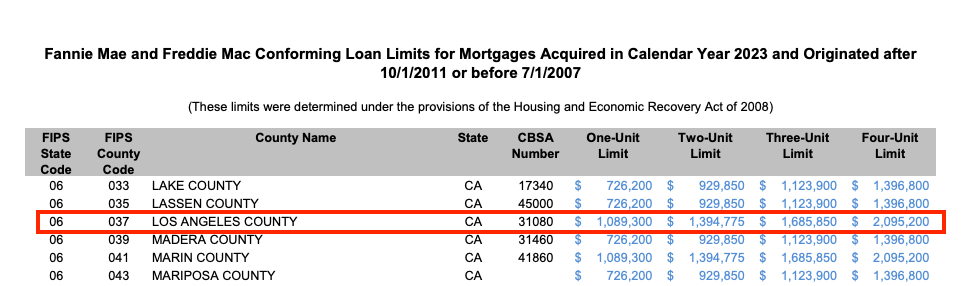
    The government provides a financial guarantee on every VA loan and this guarantee is like a form of insurance for the lender. The VA promises to repay a portion of the loan to the lender if a borrower defaults. The VA typically insures a quarter(25%) of the loan amount and that guarantee is reflected in a dollar amount called an entitlement. There are 2 layers of entitlement. There is basic and bonus or secondary level.The basic entitlement is $36K, which is what will be shown on the “certificate of eligibility”. The bonus entitlement is calculated based on the conforming loan limits in your area. You can look up your county loan limit on the Federal Housing Finance Agency’s Website.

    For 2023 the VA mortgage loan limits in LA county are as follows:
    Calculating VA Bonus Entitlement

    To get your basic entitlement, take $36,000 and multiple by four. That’s the initial amount you could borrow using a VA loan. ($36,000 x 4= $144,000)

    To get your bonus entitlement, take the conforming loan limits for your county (let’s say $1,089,300 in this case) and divide by four: $1,089,300 / 4 = $272,325. Then subtract your basic entitlement: $272,325 – $36,000 = $236,325. In this scenario, your bonus entitlement would be $236,325.

    In this scenario, if a borrower were to purchase a home for $750,000 in they would use $187,000 of their entitlement and they would have $48,825 left over which they could use to purchase another property with a VA loan without having to refinance out of the first VA loan. This remaining bonus entitlement would allow someone to purchase a property that costs up to $195,300 with no money down ($48,825 x 4 = $195,300). If the purchase price was over $195,300K the borrower would need to put down 25% of the difference. For example if the second property cost $700k then the borrower would need to come in with $126,175 as a down payment. ($700,000 – $195,300= $504,700, $504,700 x 25% = $126,175).

    In high cost markets like southern CA it is rare to have enough entitlement to purchase 2 properties with 0% down. If a borrower wants to reuse their VA mortgage they can also look at restoring their entitlement.

    Restoring a VA Entitlement

    Let’s say you buy a 4-unit property with a VA mortgage, use one unit as your primary residence for a year, and then want to purchase another property but you don’t have enough entitlement for the 2nd property. One strategy to make this work would be to refinance the 4-unit property from a VA mortgage into a conventional mortgage. By doing this you pay back the VA mortgage and restore your entire entitlement to be reused again. The VA only allows this VA restoration to occur one time.

    Using a VA Loan To Invest In Multifamily Property

    The VA loan is not designed to help someone build up a portfolio of rental property. However, a savvy borrower can still use the VA loan program to build a portfolio of rental property if they know how to work within the rules. Remember, each property must be intended as a primary residence and you only get a 1 time VA loan restoration. After using the 1 time restoration you will need to sell any property that you purchased with VA, regardless of whether it has been refinanced out of the original VA loan, before you can buy again using a VA loan. If someone has used their one time restoration and has also tapped out their entitlement they could look into selling the properties that they purchased with VA originally and doing a 1031 exchange into a new investment property. By selling the properties a borrower would restore their ability to use a VA loan again. If they decide to do a 1031 exchange, the exchange would allow them to roll their equity into new investment property without having to pay any capital gains tax.

    There are investors who have used their VA loan 10+ times using this strategy and have built significant rental property portfolios. In order to do this you have to be OK moving frequently because every VA loan is intended for a primary residence and can be converted into an investment property later. Using VA mortgages to purchase multi unit property is not only a great way to reduce your monthly mortgage payments but a great way to build generational wealth for your family and achieve financial independence.

     

    Getting Started and Scaling Your Real Estate Portfolio your VA Loan

    If you have questions about utilizing VA home loans we would honored to work with you. My team and I have lots of experience helping Veterans build and create wealth through the acquisition of real estate and we would be honored to share our resources and help you create and execute on a real estate investment plan. Our brokerage specializes in investment property sales/ multi unit property sales in Southern CA, specifically LA and Orange County and we love helping people utilize the VA mortgage benefits.

     

  • Using FHA Financing to Purchase a Multifamily Property

    Using FHA Financing to Purchase a Multifamily Property

    Introduction

    In Southern California real estate prices are high and it can be difficult for first time buyers to save up a down payment to purchase their first investment property. Buyers in this situation may want to consider using FHA financing.

    FHA loans were created by the Federal Housing Administration in the 1930’s. During the great depression of the 1930’s the housing market was on thin ice. Defaults and Foreclosures had exploded and it was impossible for the average wager earner to save the 50% down payment that was commonly required. To help resolve this issue the federal government created FHA loans as a way to reduce risks to lenders and make it easier for borrowers to qualify for financing.


    What is FHA Financing and Who Can Use It

    FHA loans were originally designed to help low to middle income borrowers purchase a primary residence. Because these loans are backed by the federal government borrowers can put down as little as 3.5% and there is a lower bar for other qualifying factors like debt to income ratio and credit score. Some people think FHA is too good to be true and that may be the reason there are so many misconceptions with FHA financing.

    Here are some of the most common misconceptions that we hear:

    1) Do you have to be low or middle income in order to use FHA finance?

    No! There are no income limits for borrowers who want to used FHA financing.

    2) You must be a first time buyer to use FHA financing and you can’t own any other property.

    This is false. You can use FHA financing even if you own other property. One important point to emphasize is that FHA is intended for the purchase of a primary residence so you must occupy the property for at least 1 year as a primary residence.

    3) You can only use FHA financing once.

    This is also false! You can only have one active FHA loan at a time but there is no limit on the number of times you can use FHA financing. For example, a borrower could buy a property with FHA financing and once they have enough equity in the property they could refinance into a conventional loan and then use FHA financing to purchase another property.

    It’s important to take note of owner occupancy requirements. If you refinance the property from an FHA loan into a conventional loan that is intended for owner occupants then you may not be able to used your FHA loan until you have met the owner occupancy requirement for the conventional loan. After all you can’t have two primary residences at the same time. If you plan to do this you should consider refinancing from an FHA loan into an investment loan that doesn’t have an owner occupancy requirement.

    4) You can only use FHA financing on condos, townhomes, and single family residences.

    Wrong! You can use FHA financing on on residential properties between 1 and 4 units. If you purchase a multifamily property with FHA financing you must still occupy one of the units. There are some other factors that come into play which we will discuss in the following sections.


    Using FHA to Purchase Multifamily Property

    When using FHA financing to purchase a multifamily property most of the same loan guidelines apply (down payment, DTI, Credit score, etc.) but there are some key benefits and drawbacks.

    One benefit of using FHA financing to purchase multifamily property is that you can count some of the rental income from the units that you don’t plan to occupy to help you qualify for the loan. This means that FHA buyers will qualify for larger loans on 2,3, and 4 unit properties than they will on a single family. The FHA loan limits also increase based on the number of units a property has which helps borrowers stay within the conforming loan limits and get the best rates and terms on their loan.

    One of the drawbacks of using FHA financing on 3 and 4 unit properties is that there is an additional qualifying factor that the property must meet. This factor is called the self sufficiency test. In order to pass the self sufficiency test 75% of the “market rents” must be equal to or greater than the monthly payment of Principle, Interest, Taxes, Insurance, and Mortgage Insurance. The appraiser is the one who determines what the market rents which sometimes makes it difficult to determine if a property will pass the self sufficiency test before opening escrow. Below is an example of how to calculate the self sufficiency test

    In this example we are examining a 4-unit property that has upside in rents. If an appraiser agrees that the market rent for all 4-units is $2,550, then this property will pass the FHA self sufficiency test. Our total market rent would be $10,200. If we multiply our market rent by 75% we get $7,650 which is greater than our monthly PITI & MI (principle, interest, taxes, insurance, and Mortgage Insurance) of $7,626.


    Other Restrictions On FHA Financing

    Properties financed with FHA loans must meet safety, security, and soundness standards, which include areas like roofs, electrical, water heaters, and property access, among others.

    Some common issues that may need to be resolved before an FHA loan can be funded include health and safety issues like: missing handrails, chipping lead paint, exposed asbestos, broken windows, broken tiles, etc.

    Owner Occupancy Requirement

    FHA loan guidelines require a borrower to occupy the property that they are buying as their primary residence for at least 1 year. By FHA standards, a primary residence is one in which the owner occupies the property for the majority of the year. The FHA also requires that the buyer moves into the property within 60 days of closing on the property.

    These requirements are intended to prevent investors from profiting off the government loan program’s affordable rates and less stringent lending guidelines. Violating the FHA’s occupancy requirements could qualify as fraud and lead to a civil or criminal lawsuit against the borrower.

    After occupying an FHA-backed property for at least the first year, owners are free to use the property as they wish. This can include renting the property out or using it as a secondary or vacation home.

    Mortgage Insurance: UFMIP & MIP

    There are two types of mortgage insurance that borrowers will encounter with FHA loans: Up Front Mortgage Insurance Premium (UFMIP) & the monthly Mortgage Insurance Premium (MIP). Because the borrower is putting less money down and the borrower has less of their own money invested there is a higher likelihood of default with FHA loans. The UFMIP and MIP are designed to help mitigate this risk and protect the lender.

    Up-Front Mortgage Insurance Premium- (UFMIP)

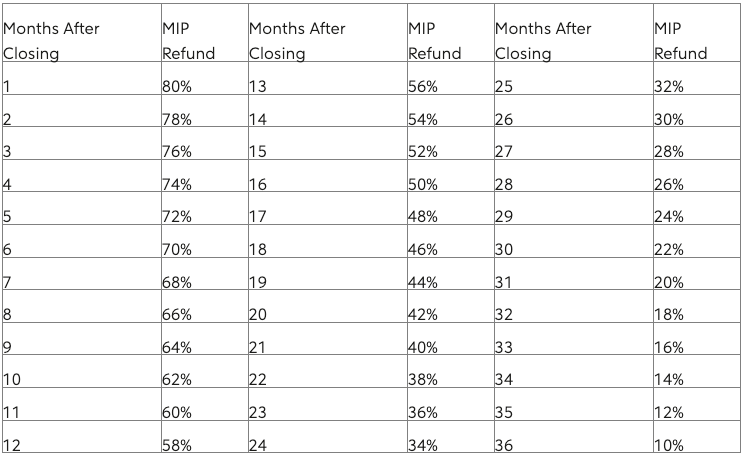
    The Up-Front Mortgage Insurance Premium (UFMIP) is paid at closing and borrowers can either pay the UFMIP in cash or the cost can be financed into the loan amount. The cost of the UFMIP as of 2023 is 1.75% of the loan amount. If you refinance or sell the property within 3 years you are eligible for a partial refund of the UFMIP as outlined in the chart below.

    Mortgage Insurance Premium- (MIP)

    There is a monthly MIP that FHA borrowers must pay for the life of the loan. The cost of the MIP will depend on whether the loan amount is within the conforming loan limits. If the loan amount is over the conforming loan limit it will be considered a “High Balance” and the MIP cost will increase slightly. For conforming loans the MIP is an annual cost of .55% of the loan amount.

    Before 2013 MIP used to go away after a borrower reached 20% equity in a property, however now the MIP must be paid for the life of the loan in most cases. Because of this change, most borrowers will explore refinancing into a conventional owner-occupied loan once they reach 20% equity or a conventional investment loan once they reach 25% equity.


    First Steps Towards Buying a Property With FHA Financing

    The first steps are to connect with a loan broker and a real estate broker/agent. The loan broker will be able to if you qualify for an FHA loan based on your current financial situation. A real estate broker will be able to show you what multifamily properties you may be able to purchase with your FHA loan. We have helped tons of first time and experienced investors use FHA financing to purchase multifamily property and we have great relationships with lenders who have helped our clients with these types of loans. If you are interested in learning more, reach out to us today!


  • The CPI Numbers Are In! Max Rent Increases For Aug 1, 2023- July 31, 2024

    The CPI Numbers Are In! Max Rent Increases For Aug 1, 2023- July 31, 2024

    2023 Max Allowable Rent Increases For Property Subject to AB1482

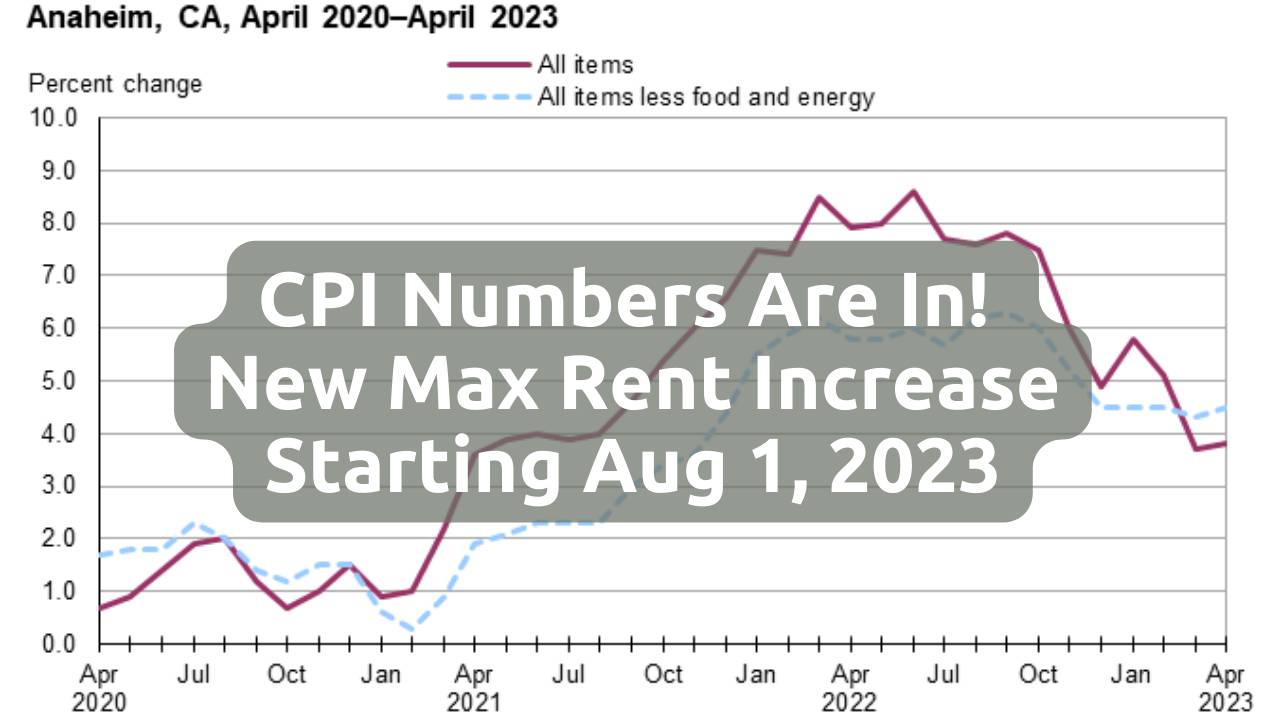
    The US Bureau of Labor Statistics recently published the April 2023 CPI numbers. According to the CA Statewide rent control law, AB1482, the April CPI numbers dictate how much property owners can increase rents for the 12 month period starting August 1st of the year the CPI numbers are published.

    AB 1482 restricts rent increases in any 12-month period to no more than 5% plus the percentage change in the cost of living (CPI), or 10%, whichever is lower. For rent increases that take effect between August 1, 2022 and July 31, 2023, the maximum allowable increase in Los Angeles has been 10%.

    The official CPI number for April 2023 is 3.8% in LA County. That means for the period from August 1, 2023 thorough July 31, 2024 property owners will be allowed to increase rents by a maximum of 8.8%, a 1.2% reduction from the previous 12 months.

    AB 1482 applies the April CPI to rent increases that are effective on or after Aug. 1 of each year. The CPI percentage must also be rounded to the nearest one-tenth of a percent. This means that the CPI you must use will depend on when the rent increase will be taking effect, whether before August or on or after Aug. 1 of any calendar year.

    It’s important to note that this max allowable rent increase of 8.8% only applies to properties in LA county that are subject to AB1482 and are not subject to any additional local rent control limits.

  • The Long Beach Garage Resale Program

    The Long Beach Garage Resale Program

    Introduction

    Long Beach has a rich history, having experienced several housing booms over the past 120 years. While the charming architecture of early 1900s buildings is beloved by many residents, parking can often pose a challenge due to the absence of on-site parking requirements for these older properties. To address this issue, the city established the Garage Resale Program to encourage residents to utilize their garages for parking, ultimately reducing the number of cars parked on the streets.


    What is the Long Beach Garage Resale Program?

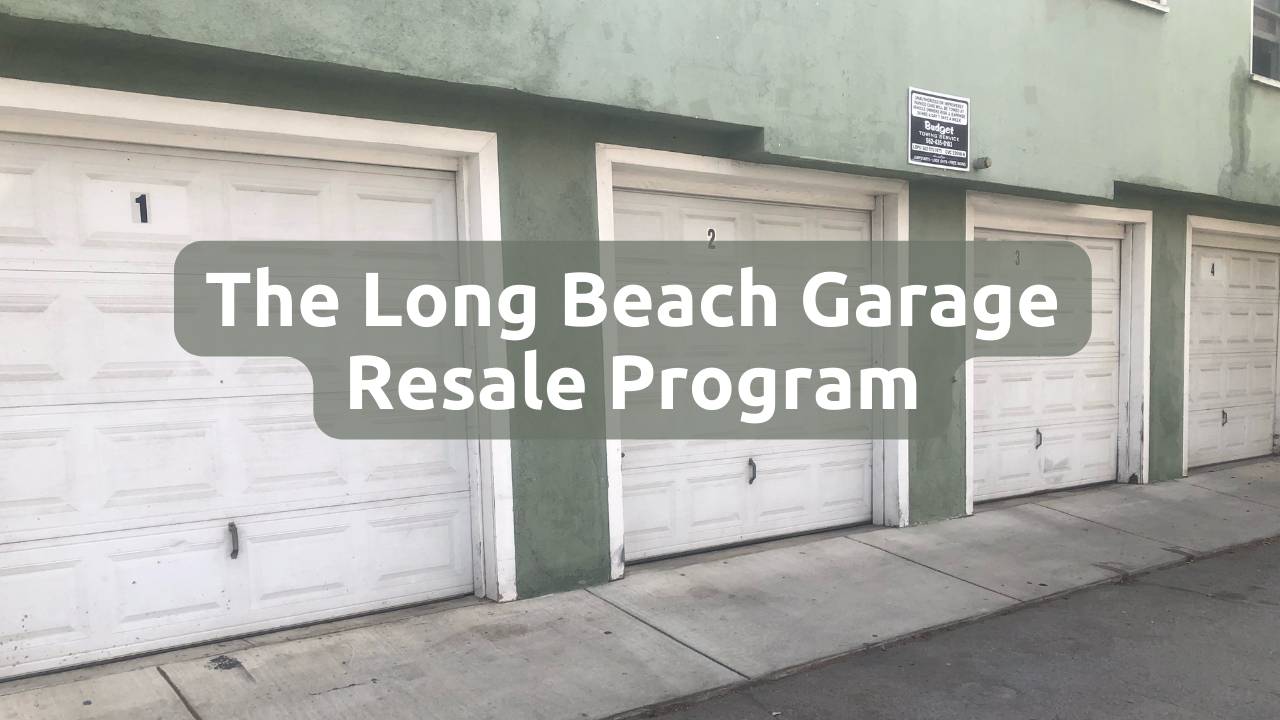
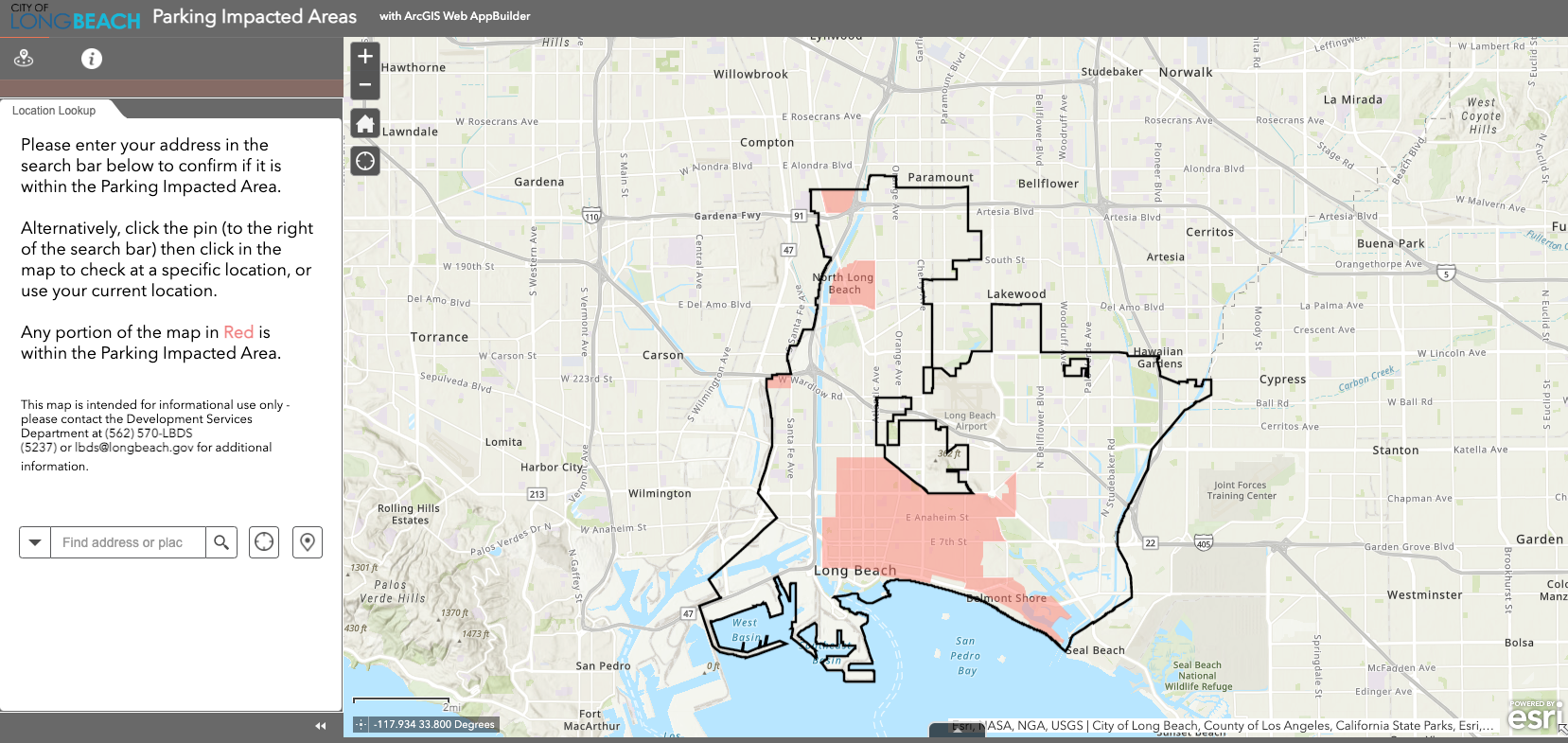
    The city of Long Beach has designated “parking impacted areas” in neighborhoods where street parking is scarce. Anytime a property located in a parking impacted area sells, the property owner is required to complete the city’s garage resale program. If the property has garages, the owner is required to submit an application for inspection, pay the inspection fee, and allow a city inspector to look inside the garages to make sure there is room to park a car. If a property doesn’t have a garage the owner is still required to go through the Garage Resale Program, however they will apply for a garage exemption certificate. This program is only required for residential property.

    What’s the fee for the Garage Resale Program?

    The fee schedule for the program can be found here. As of April, 2023, The fee is $105 for 1 & 2 unit properties. The fee increases $11 for each additional unit beyond 2 units. For example, the inspection cost for a 4 unit building would be $105 + ($11 x 2) = $127.

    For properties that have a common parking facility or no parking the fee is $20. The fee is also $20 if the property is selling for the first time.

    What is the inspection like?

    The city inspector is primarily looking to make sure that there is room to park a car in the garage. In my experience, the inspector will not inspect beyond the garage or request to enter any units. It will usually take less than 1 minute per garage for the inspector to complete his inspection.

    Compared to pre sale inspections that some other cities require, the Long Beach Garage Inspection is very manageable. In the city of Los Angeles requires much more invasive 9A reports where all smoke detectors, water heaters, gas meters, etc. are checked. The city of Signal Hill has a presale inspection where all units are inspected and and un-permitted or substandard work is required to be corrected before escrow can close.


    The Process:

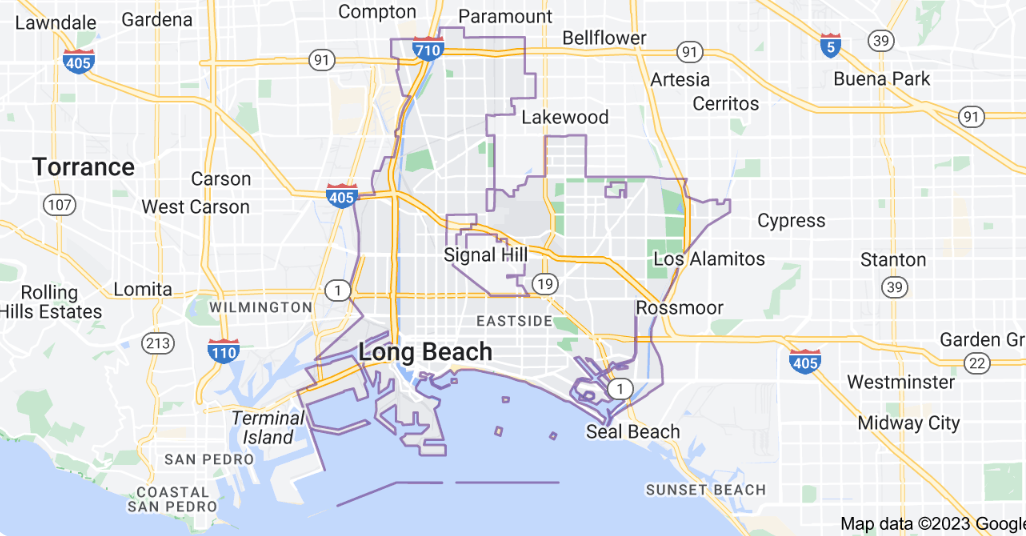
    1. Check to see if your property is located in a parking impacted area. You can search for your property here. The areas on the map below are parking impacted areas.


    2. Call the Code Enforcement Bureau at (562) 570-2633 for an appointment.
    3. Complete an Application for Inspection of Required Off-Street Parking.
    4. Make a check payable to the City of Long Beach for the amount indicated on the Garage Resale Program Fee Schedule.
    5. Provide the completed application and check to the City Inspector at the time of your appointment. Do NOT mail or hand deliver applications or fees for this service.

      Please note: A report can take up to five business days to process. Please schedule your appointment accordingly. Rescheduled appointments must be made 24 hours prior to the original appointment. Please note that failure to appear at the scheduled appointment time will result in the issuance of a “re-inspection fee” in the amount of $220.

    Common Issues

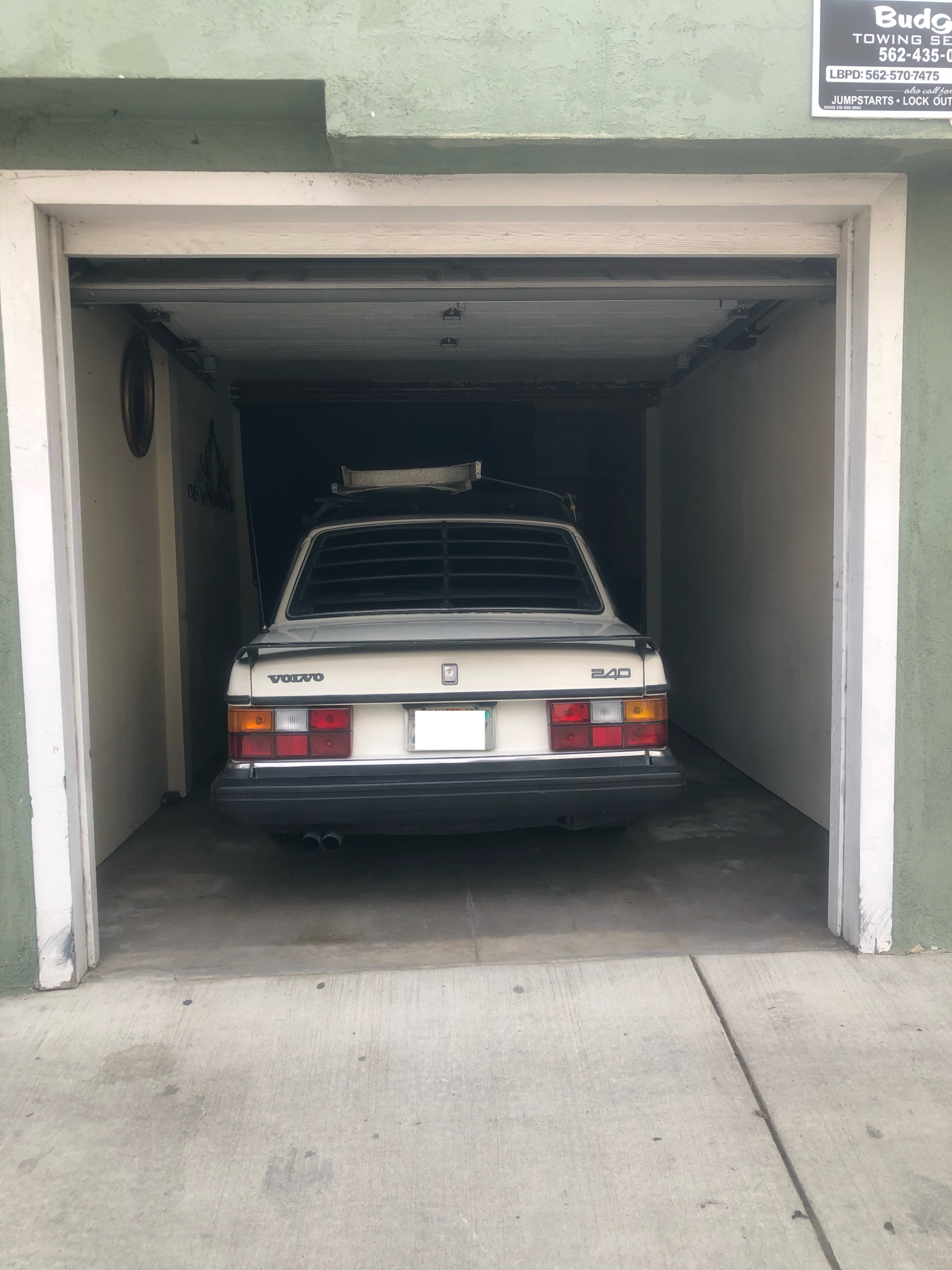
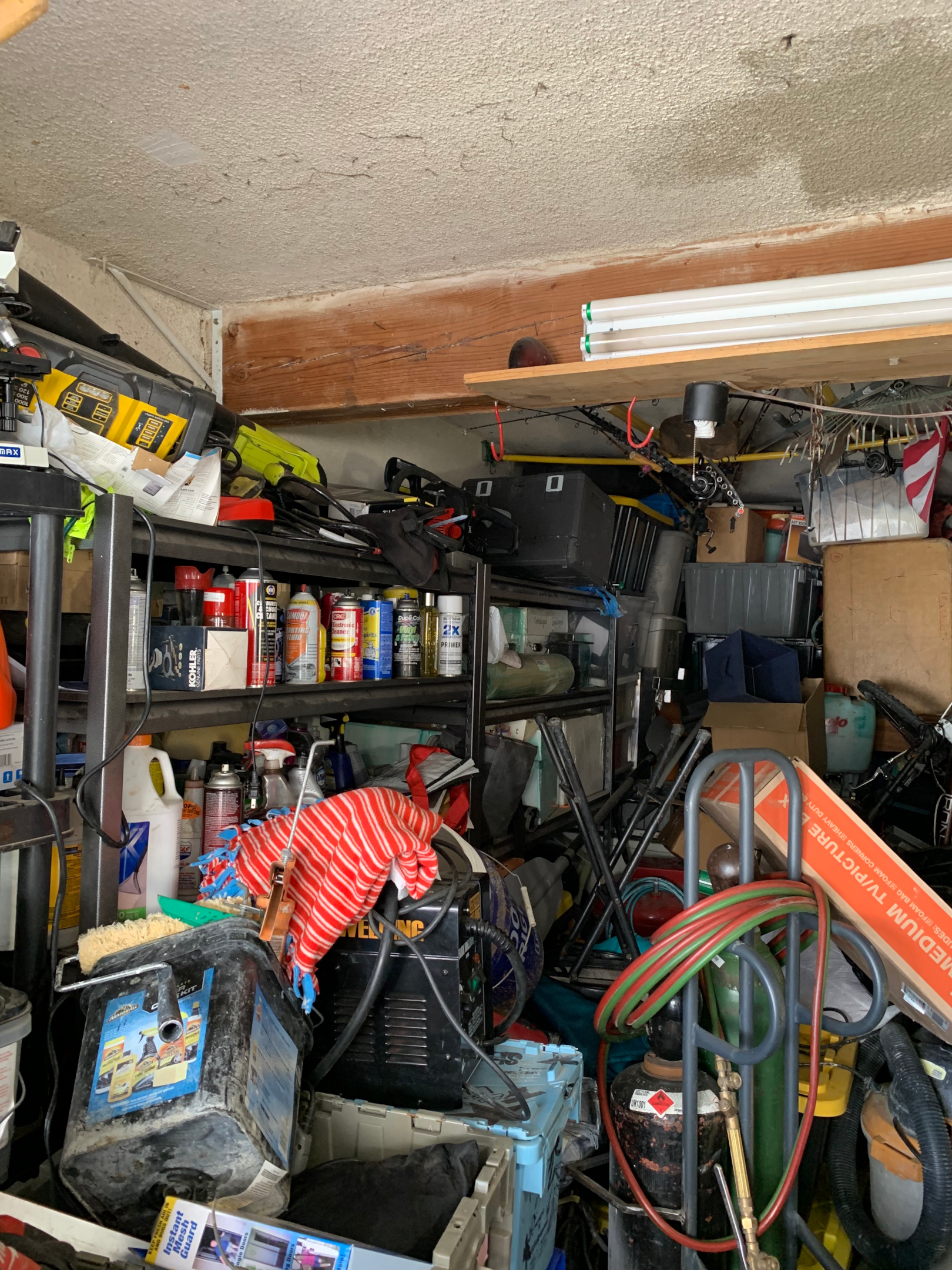
    The garage is being used for storage

    This is probably the most common issue that comes up during a garage inspection. Once the garage is cleared out it can be reinspected. Sometimes inspectors will accept pictures of cleared garage instead of requiring a re-inspection.

    The garage was converted into a living space without permits

    Major code violations like this can be more difficult to overcome. According to the application: Any unlawful condition relating to the use and maintenance of the required off-street parking spaces will be cited by the inspector. Such condition(s) shall be brought into compliance within ninety (90) days of such citation, or within sixty (60) days of the close of escrow, whichever comes first.

  • Understanding AB1482’s Substantial Remodel Clause for Rental Property Investors

    Understanding AB1482’s Substantial Remodel Clause for Rental Property Investors

    Introduction

    On Jan 1, 2020, California state law AB 1482 went into effect. The bill, also know as The Tenant Protection Act of 2019, made California the second state in the US to pass a statewide rent control law. Many investors were concerned that the bill would make it impossible to vacate units unless a tenant violated the lease; however, this isn’t the case. AB1482 allows an owner to vacate a unit for several “No Fault Just Cause” reasons including if an owner is going to do substantial renovations to a unit.


    History: Jan 1, 2020 – Now (April 2023)

    Despite The Tenant Protection Act – AB 1482 bill going into effect in 2020, we haven’t seen many substantial remodel evictions. The main reason we haven’t seen substantial remodel evictions is because in March of 2020 there was a freeze on all evictions due to the COVID-19 pandemic. Fast forward to 2023, LA City’s COVID moratorium expired on January 31st, 2023 and LA County’s COVID moratorium expired on March 31st, 2023. Now, in April 2023, Rental property investors are able to use the “substantial renovations clause” and we are expecting to see these types of evictions increase.


    What is the Substantial Remodel clause?

    The Tenant Protection Act – AB 1482 outlines the different reasons that a property owner can terminate a tenancy. The types of evictions are split into 2 categories: At fault eviction & no fault just cause eviction. An at fault eviction refers to an eviction that takes place because the tenant was in breach of the lease or rental agreement . A simple example of an at fault eviction would be if a tenant didn’t pay rent. The no fault just cause reasons include an owner wanting to move into a unit, an owner wanting to remove the unit from the rental market, an owner complying with orders from a government agency which require vacating the unit, or the owner intends to demolish or substantially remodel a unit.


    What qualifies as a substantial remodel?

    The bill says that, “substantially remodel” means the replacement or substantial modification of any structural, electrical, plumbing, or mechanical system that requires a permit from a governmental agency, or the abatement of hazardous materials, including lead-based paint, mold, or asbestos, in accordance with applicable federal, state, and local laws, that cannot be reasonably accomplished in a safe manner with the tenant in place and that requires the tenant to vacate the residential real property for at least 30 days. Cosmetic improvements alone, including painting, decorating, and minor repairs, or other work that can be performed safely without having the residential real property vacated, do not qualify as substantial rehabilitation.


    Relocation Assistance Payments

    If an owner terminates a tenancy for a no-fault just cause reason, the owner has to notify the tenant that they are entitled to relocation assistance OR a rent waiver. If the owner chooses to pay relocation assistance the amount must be equal to 1 month of the tenants rent that was in effect when the notice or termination of tenancy was issued. The payment must be paid within 15 calendar days of the notice being served. If the owner opts for a rent waiver they can waive the final rent payment. If a tenant doesn’t vacate the unit, the amount of relocation assistance paid or rent waived shall be recoverable as damages. Some municipalities have created additional rules around relocation assistance, including Long Beach, CA.


    Additional Restrictions At The Local Level

    AB1482 does not apply to residential real property subject to a local ordinance requiring just cause for termination adopted on or before September 1, 2019, or to residential real property subject to a local ordinance requiring just cause for termination adopted or amended after September 1, 2019, that is more protective than these provisions, as defined. The bill would void any waiver of the rights under these provisions. The bill would repeal these provisions as of January 1, 2030.


    LA City

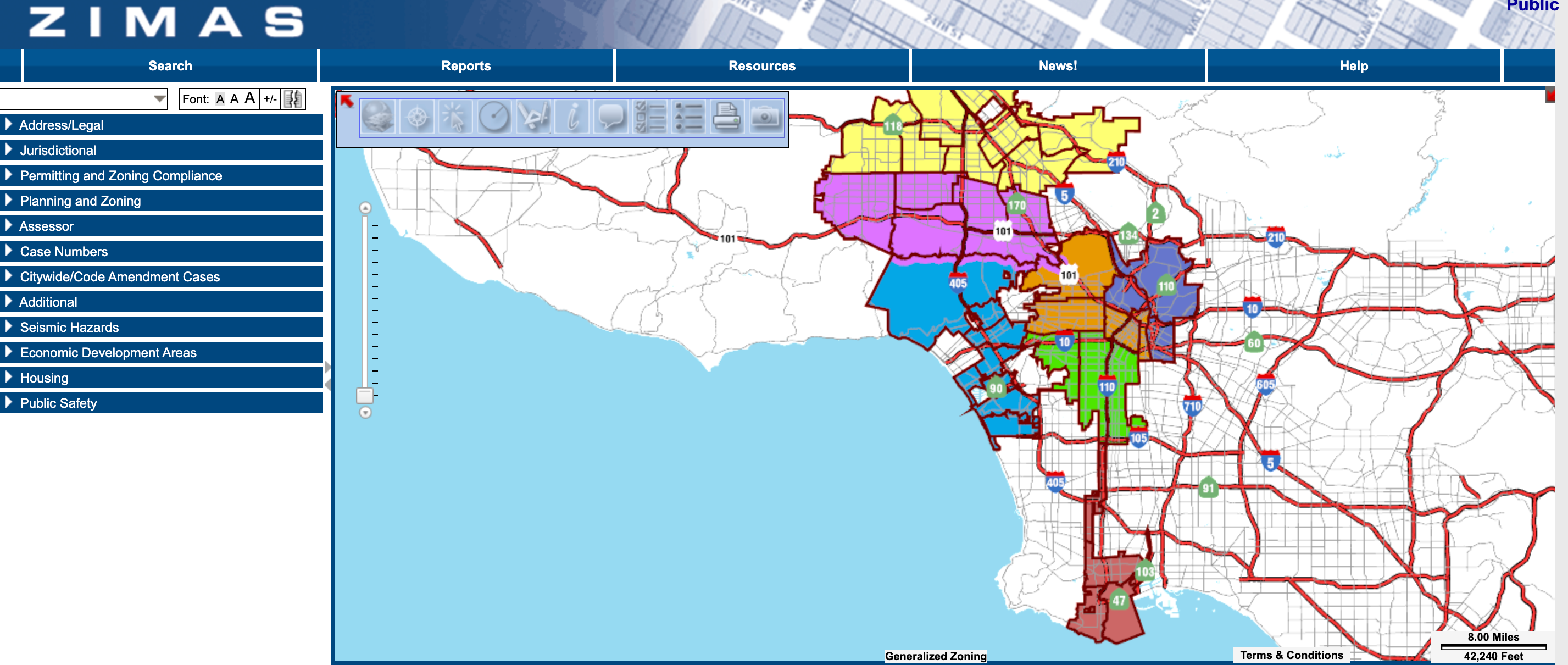
    Properties already protected by LA RSO are not able to evict based on “substantial renovations.” Use the link below to check if your property is subject to the Los Angeles Rent Stabilization Ordinance. http://zimas.lacity.org/


    Long Beach

    Long Beach has added additional rules around the relocation assistance payment amounts and process of serving a substantial renovations notice. Long Beach law says that owners must pay a minimum relocation assistance of $4500 or 2 months of current rent, whichever is greater, and funds must be available to the tenant 15 days after serving the notice. Owners must also pull permits before the notice can be served, attach permits to the written notice of substantial renovations, and also notify the city they they are vacating a unit in order to do substantial renovations.


    Other cities in LA County.

    Over the last several years we have seen rents increase at a rapid pace and inflation has driven up the cost of other essentials like fuel, food, etc. We have seen rent control emerge as a contentious topic across the country. Many cities are passing local rent control ordinances with rent cap, eviction restrictions, and relocation fees in a desperate effort to maintain affordable housing.

    In LA County we have seen several cities adopted their own rent control laws: Glendale (2019), Inglewood (2021), Pomona (2022), Bell Gardens (2022), Pasadena (2022). Be sure to check your local ordinance before serving a substantial renovations notice.


    Cash for keys

    Some owners are opting negotiate “cash for keys” with tenants prior to serving a substantial renovations notice. In cities like Long Beach, cash for keys can have several advantages over serving a substantial renovations notice. For example, if the tenant agrees to cash for keys, you avoid getting the city involved, the tenant is voluntarily moving so there is less change of an eviction taking place, an owner isn’t required to substantially renovate a unit, and the owner doesn’t have to pay the relocation assistance before getting possession of the unit. In negotiations an owner can point out that they will have to issue a substantial renovations notice if a cash for keys agreement isn’t reached.


    Is if worth it to vacate a unit for substantial renovations?

    financial, analysis, accounting

    The answer is, it depends. The Tenant Protections Act – AB 1482 imposes a rent limits on property owners. A property owner can only increase rent 5% per year, plus the local inflation rate, with a maximum annual increase of 10%. Many investors will buy buildings from tired landlords who have kept rents low and haven’t kept up on maintenance. In some instances it would take many years to get the rent up to market price through annual rent increases and it may not make sense to spend a lot of money improving the condition of the building if rents can’t be increase more than 10%. We also know that the value of an income property is derived from the income that it produces. By increasing the rent and owner can significantly increase the value of the property.

    One of my clients recently purchased a 5-unit building in Long Beach. The seller had owned the building since the 1990s, the property was in rough condition, and the rents were extremely low. All 5 of the units were 3bed/1bath and the average rent was about $1050/month. Market rent for a 3bed/1bath unit that neighborhood was $2700/month. If she was limited to an annual rent increase of 10% if would have taken 10 years to get the rents up to $2700/month. My client negotiated cash for keys with the tenants, significantly improve the condition of the property, and increase all rents to $2700/month. Based on the new rent, the property increased in value by $800,000! If she wasn’t able to reach an agreement for cash for keys she could have issued substantial remodel notices and achieved the same result.

    In cities, like Los Angeles, which have strict rent limits it becomes much more challenging to make these types of projects work. If a property owner can’t increase rents enough to cover the cost of a large improvement often the improvements aren’t done.

    Is a substantial remodel notice right for you? We can help! Reach out to us today!


    Additional Tips For Investors

    If a tenant is on a lease or rental agreement and has continuously and lawfully occupied the property for less than one year, property owners may be able to issue a non-renewal instead of going through the substantial remodel process.


    The Current Legislative Environment

    As I mentioned earlier in this post, rent control continues to be a hot topic. Unfortunately, in many areas of the country, renters outnumber owners by a sizable margin. Politicians will pass policies that appease the larges voter base, whether the laws are good for the rental market or not.

    In California a bill called AB 567 was recently introduced (2/15/2023) at the state level to make parts of AB 1482 more strict. AB 567 would eliminate owners ability to vacate units in order to do substantial remodels and it would tighten the rent limits imposed by AB 1482, making the the max annual rent increase just 5% statewide.

    There are a few things that YOU can do to oppose additional rent control laws.

    1) Support your local apartment owners association. Apartment owners lobby against these laws on your behalf. If you are located in Southern California, the Apartment Owners Association of California and Southern Cities is a great Option.

    2) Reach out to your local representatives and let them know that you oppose additional rent control laws because they only hurt the rental market.


    Helpful Links

    Long Beach Substantial Remodel Relocation Assistance Rules: https://library.municode.com/ca/long_beach/codes/municipal_code?nodeId=TIT8HESA_CH8.99JUCATETE#:~:text=%C2%A7%201%2C%202020)-,8.99.,cause%20termination%20of%20tenancy%20protections.&text=All%20of%20the%20tenants%20have,for%2012%20months%20or%20more.&text=One%20or%20more%20tenants%20have,for%2024%20months%20or%20more.


    LB: Substantial Remodel Required Notice to City- https://www.longbeach.gov/globalassets/lbds/media-library/documents/housing–neighborhood-services/tenant-assistance-policies-tap/notice-to-rental-property-owners-regarding-substantial-remodel-building-permits


    The Tenant Protection Act – AB 1482 Bill Text: https://leginfo.legislature.ca.gov/faces/billTextClient.xhtml?bill_id=201920200AB1482


    Legal disclamer

    Do not take this article as legal advice. Be sure to consult with legal professionals if you considering terminating a tenancy.


  • Using 1031 Exchanges to Maximize your Real Estate Investments

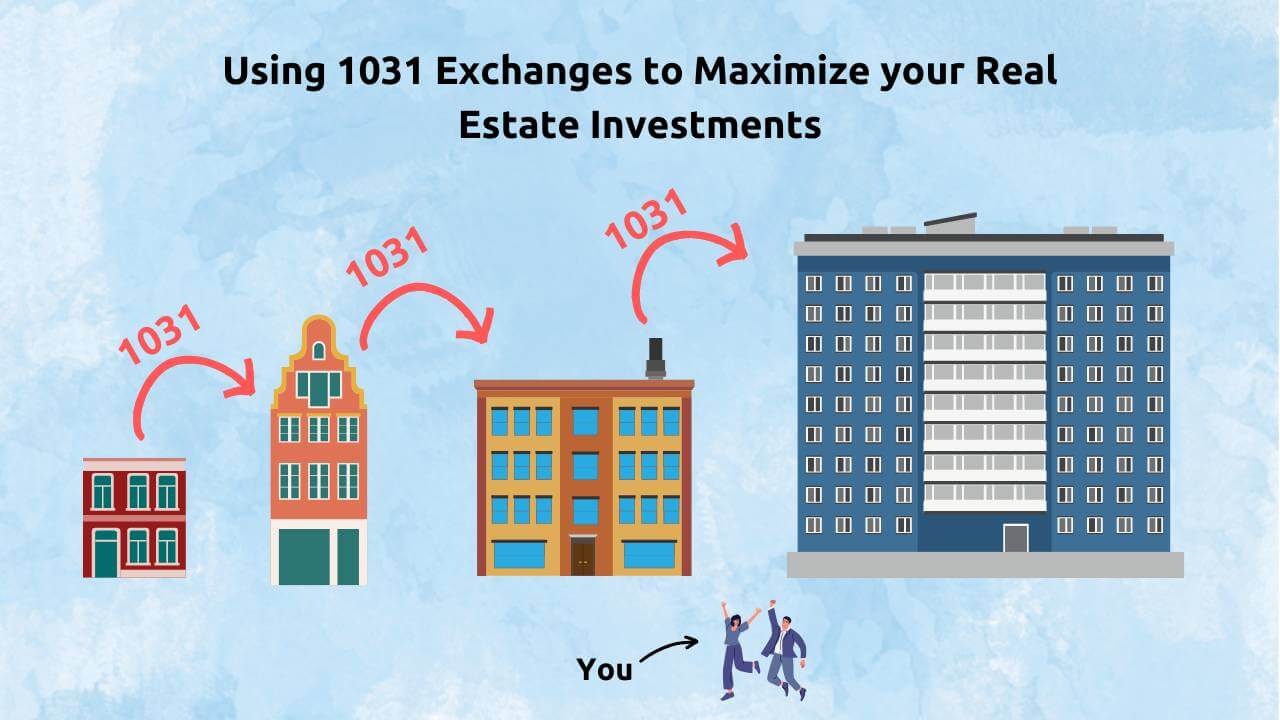
    Using 1031 Exchanges to Maximize your Real Estate Investments

    Introduction:

    If you’re a real estate investor looking to sell your investment property and purchase a new one, it’s worth considering a 1031 exchange. This exchange is governed by Section 1031 of the US Internal Revenue Code and allows for the deferral of capital gains tax.

    Essentially, it enables investors to reposition investment real estate to help meet their objectives while preserving all of their equity so it continues to work for them.

    What is a 1031 Exchange?

    A 1031 exchange is a type of tax-deferred exchange that enables real estate investors to postpone the payment of capital gains tax by selling their investment property and reinvesting the proceeds in another property or properties of like-kind and equal or greater value.

    Investors must adhere to specific rules outlined in section 1031 of the IRS code. We will discuss the specific rules in detail later in this blog.

    Reasons to Utilize a 1031 Exchange

    There are several reasons why real estate investors may consider utilizing a 1031 exchange:

    1. Tax Benefits: As previously mentioned, the main benefit of a 1031 exchange is the capital gains tax deferral, which allows investors to keep more of their capital working for them rather than paying out a significant portion of their equity in taxes.
    2. Ability to Diversify: Investors may wish to diversify their real estate holdings and seek out properties with better return prospects or properties with other benefits. For example, a multifamily investors who is tired of property management may choose to do a 1031 exchange into a triple net property with less of a management burden while maintaining cash flow.
    3. Consolidate Properties: Investors may want to consolidate several properties into one, for estate planning purposes or to streamline their real estate holdings.
    4. Reset Depreciation: Investors can reset the depreciation clock by using a 1031 exchange, which allows them to take advantage of tax deductions on the new property.
    5. Increase Return on Equity: As equity in a property grows an investor’s return on equity may actually decrease. This happens because more and more dollars are built up in one property and they aren’t working as hard as they could be. To solve this, many investors will 1031 exchange into larger properties where they can use more leverage and thereby increase their return on equity. Investors may also look at exchanging into properties where there is an opportunity to add value, which would also increase their return on equity.

    Types of 1031 Exchanges

    Originally, only “Simultaneous Exchanges” were permitted in 1031 exchanges where one investment property was traded for another on a one-to-one basis. However, in the 1980s, the IRS allowed for “Delayed Exchanges” after the landmark “Starker Case” in federal tax court. Unlike Simultaneous Exchanges, Delayed Exchanges offer more flexibility, as sellers can sell their investment property to any buyer and subsequently use the sale proceeds to buy like-kind replacement property within 180 days.

    Today, Delayed Exchanges are the most common type of 1031 exchange. Other exchange formats include Reverse Exchanges, where the replacement property is acquired first; Improvement Exchanges, which involve making improvements to the replacement property; Simultaneous Exchanges, which are now less common; and Partial Exchanges, which involve exchanging a portion of the original property.


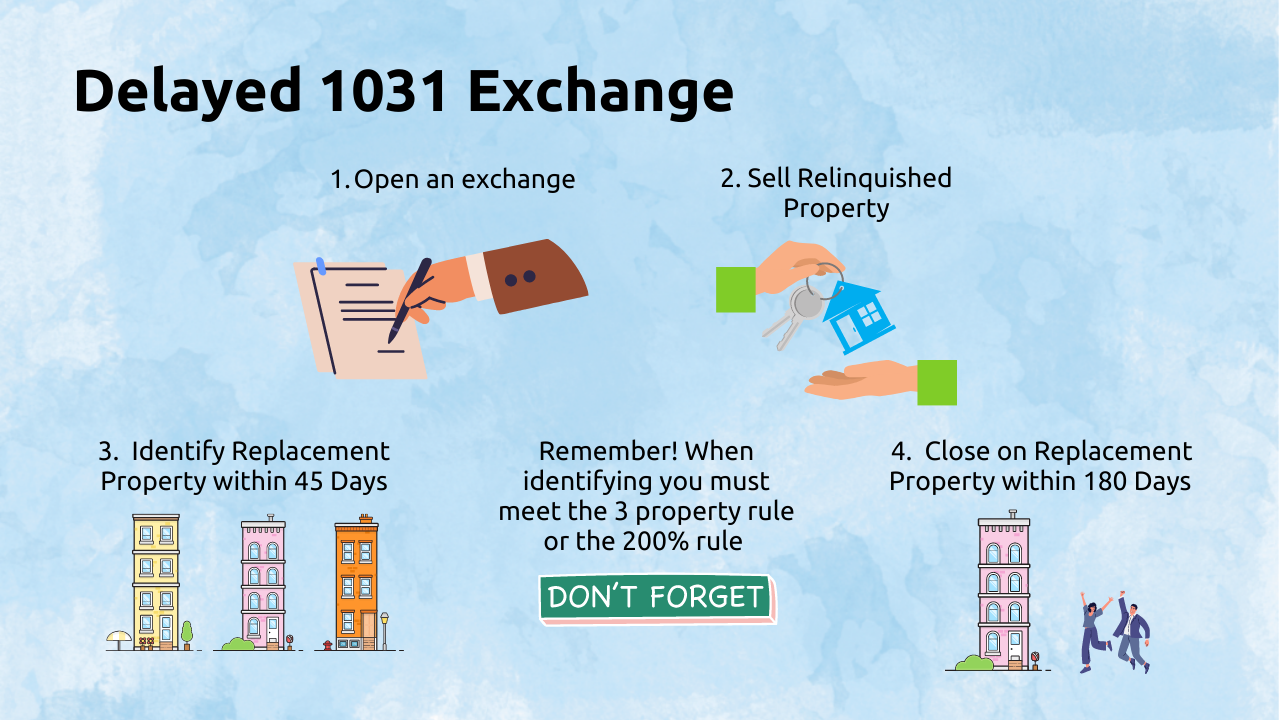
    Delayed 1031 Exchange

    A delayed exchange is the most common type of exchange. In a delayed exchange real estate investors may take advantage of the full exchange period to acquire a replacement property.

    Steps for a delayed Exchange:

    1. Open an Exchange

    Real estate investors must open an exchange with a qualified intermediary prior to the close of escrow on the relinquished aka down-leg property.

    2. Close Sale of Relinquished Property

    Via an executed assignment, the 1031 Intermediary assumes the purchase contract and instructs the closing agent to deed the relinquished property directly from the investor to the buyer. The proceeds from the sale are sent directly to 1031 Intermediary, thus protecting the investor from the prohibited actual or constructive receipt of funds. The availability of these funds is restricted by the IRS.

    3. Identification of Replacement Property – 45-day deadline

    Real estate investors must identify the replacement property before midnight of the 45th day of the exchange. The clock for exchange deadlines (i.e. 45-day identification period and 180-day exchange period) starts the day after the close of escrow for the relinquished property. In order to be valid, the identification of the up-leg property must be in writing, signed by the investor and sent to a qualified party within the 45 days.

    Rules for Identification of Replacement Property

    The Three-Property Rule – Real estate investors may identify a maximum of three (3) replacement properties without regard to the total value of properties identified.

    The 200% Rule – Real estate investors may choose to identify more than three (3) replacement properties. If an investor goes this route then total value of all properties identified must not exceed 200% of the relinquished property. If the 200% rule is exceeded, an investor can still make the 1031 exchange work by purchasing no less than 95% of the aggregate value of the properties identified. Failure to purchase 95% of the properties identified could result in capital gains taxes.

    4. Close on Replacement Property

    Within the 180-day exchange period, or before the investor’s tax filing date, the investor must close escrow on an identified replacement property. As with the down-leg property, the investor will assigns the purchase contract to the 1031 exchange intermediary. The exchange funds are then transferred from the intermediary to the escrow office handling the purchase of the replacement property.

    Common 1031 Exchange Issues

    Investment Property Only Tax

    Deferred exchanges are available only for investment property. Primary residences do not qualify for exchanges. The universal exclusion (aka the primary residence exemption), under section 121 of the Internal Revenue Code, permits the elimination of capital gains from the sale of primary residences if certain conditions are met.

    If a portion of a primary residence is used for investment purposes, that portion may be exchanged. For example an investor who owns a duplex and lives in one unit could sell their duplex, take the “universal exclusion” for the portion of the property that they occupy and 1031 exchange the portion of the property that is used for investment.

    Cash and Debt Boot

    Any cash proceeds remaining after the acquisition of replacement property are considered “cash boot” and are taxable at the capital gains tax rate. Access to these funds is limited in accordance with IRS restrictions. If debt is not replaced it is considered “mortgage boot,” which also incurs tax liability to the investor at the capital gains tax rate. As each investor’s financial situation varies, we highly recommended that investors consult their accountant before opening an exchange.

    DSTs (Delaware Statutory Trusts)

    DSTs enable investors to pool their assets with others in the purchase of like-kind replacement property, offering financial security and low maintenance for investors. However, individual investors must confirm that their corresponding interest is adequate to defer all capital gains tax associated with the sale of their relinquished property.

    Partnerships

    Partnerships are allowed to exchange, provided that the exchange takes place at the partnership level. Complex tax issues arise when underlying partners have varying investment goals and choose to separate or restructure. Seeking advice from a tax professional is crucial to ensure that the partnership receives the expected tax benefits.
    Partial Exchange

    The IRS allows for partial exchanges where an investor can use a portion of the net proceeds from selling their investment property to purchase a replacement property and exclude the remaining amount for personal use. However, any excluded funds are considered cash boot and will be subject to capital gains taxes, and potentially subject to withholding. To avoid delays, the investor must inform their 1031 intermediary before the close of escrow on the relinquished property of their intention to exclude cash. Otherwise, they may have to wait until the end of the exchange period to access the remaining funds. We advise investors to seek advice from their accountant or tax attorney to determine whether a partial exchange is advantageous for them.

     

Get exclusive Multifamily offers !