Tag: ADU

  • Big Changes to Long Beach Section 8- 2024

    Big Changes to Long Beach Section 8- 2024

    Long Beach Housing Authority Recently Published Updated Payment Standards & Announced Improved Processes For Property Owners

    Watch the Video:

    In this video I sit down with Mechell Roberts (From Long Beach Housing Authority) and Cristina Garcia (Property Manager) and we discuss the big changes that section 8 is rolling out for 2024.

    Contact Info:

    Mechell Roberts- Long Beach Housing Authority: 562-570-6985, https://www.longbeach.gov/haclb/owners-and-agents/

    Cristina Garcia- Heart Property Management: (562)270-4253, https://www.heartpmg.com/

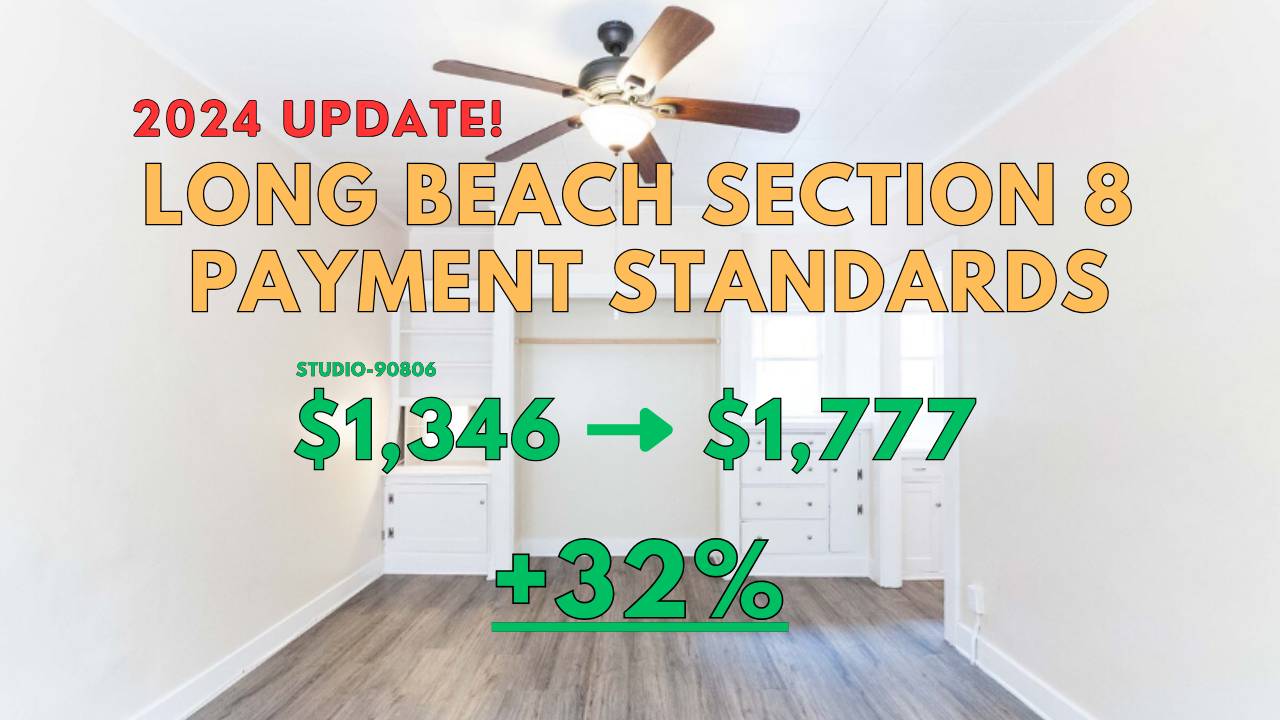
    Updated Payment Standards

    On October 1st, the Long Beach Housing Authority updates payment standards for section 8 housing participants. The payment standards are broken down by bedroom count in each zip code. It’s important to note that the published payment standards aren’t necessarily the rents that you will receive if you rent to a Section 8 participant. There are 2 calculations that the Housing Authority will complete prior to giving owners a final rent number. 1) Rent Reasonableness Calculation 2) Tenant Assistance Estimator Calculation

    What is The Rent Reasonableness Calculation?

    The Housing Authority will use a third party to pull rental comps within 1 mile of a unit that a section 8 participant has applied for. The goal is to understand what non-section 8 tenants are paying for similar units. They will use the rental comps as the first factor to determine what the Housing Authority can offer an owner for rent. Once rental comps have been pulled, the Housing Authority will email the owner the rent offer and if the owner accepts they will move on to the second calculation in the process.

    The Housing Authority will make adjustments to the rent for extras like laundry, parking, storage, garages, etc. It’s important to note that the Housing Authority will not make adjustments for upgraded finishes in the unit. For example, upgraded counter tops, flooring, etc, will not result in a higher offer from section 8. However, these unit upgrades may help you attract tenants and fill your unit more quickly.

    The rent reasonableness calculation applies when a tenant applies for a unit and throughout the span of a tenancy. When an owner applies for rent increases, they will be subject to the rent reasonableness calculation and may be denied a rent increase if the new rent exceeds the rental comps in an area.

    What is the Tenant Assistance Estimator Calculation?


    The Housing Authority will typically pay a portion of a tenant’s rent and the tenant will be responsible for paying the balance.  The Assistance Estimator Calculation ensures that the tenant isn’t paying more than 40% of their adjusted monthly income towards rent.

    The Long Beach Housing Authority has a calculator, which will be posted on their website, that owners can use to understand this calculation. Alternatively, if a housing provider calls or visits a rental clinic someone at the Housing Authority office can walk them through this calculation. The housing authority may adjust their rent offer down if a prospective tenant would be paying more than 40% of their adjusted income towards rent.

    The Assistance Estimator Calculation only applies when a section 8 tenant is applying for a unit. The Housing Authority will not do the Assistance Estimator Calculation when rent increases are issued throughout the span of a tenancy.

    Section 8 Processing Times

    In the past it could take weeks or even months to go through the process to accept a section 8 applicant. The Long Beach Housing Authority has completely revamped this process and drastically reduced processing times. Once an owner turns in their packet (RAFTA) they can now schedule an inspection of the unit which will take place within 5 days.

    Additionally, the Long Beach Housing Authority is now hosting a weekly “Leasing Clinic.” Every Wednesday housing providers will be able to visit the Housing Authority Office and go through the application process. The Leasing Clinics will assist owners with submitting their RAFTA and the Housing Authority will run the Reasonableness Calculation and Tenant Assistance Estimator Calculation so they can provide a rent offer on the spot. If an owner wants to proceed with a rent offer, they can schedule a property inspection which will take place within the next 5 days.

    To speed up the process further, housing providers now have the option to pre register and do pre inspections. If an owner have an upcoming vacancy.

    Additional Owner Incentives

    The Long Beach Housing Authority is currently offer 2 different incentive programs to encourage housing providers to rent to section 8 participants.

    The Housing Authority is currently offering $2500 bonus incentives if a a housing provider rents a unit to a tenant that is on a preselected list. The list is comprised of families that are new to the section 8 program.

    If a housing provider rents a unit to a family that has been “previously unhoused” the housing provider can receive a $2500 bonus, the tenant will receive security deposit assistance, and there is a fund that will cover some damages to the unit (if any) when the tenant moves out.


    What Does the Housing Authority Look For During Inspections?

    The inspection process will be changing soon but for the most part the Housing Authority is inspecting the property for health and safety issues. The inspections take place before a voucher holder moves into a unit and every 2 years after a tenancy is established. Some items that come up frequently during inspections are:

    • Peeling and chipping pain (lead hazard)
    • Missing smoke detectors and carbon monoxide detectors
    • Deadbolt locks on bedrooms (fire safety issue)
    • Stove hoods must be clean and in good working order
    • All provided appliances must be fully functional (all stove burners working)
    • Chipped or damaged flooring (tripping issues)
    • All outlets need to be grounded
    • Window screens and window locks in good working order
    • No leaks, faucet drips, running toilets, or clogged drains
    • No rotting or damaged garage framing
    • Rotting or damaged stairs or decking
    • Laundry rooms clean, accessible, and ventilated
    • Doorbell must work if provided
    • Screen doors can’t be damaged
    • No pest control issues
    • Tripping hazards in common walkways
    • Overgrown yards or dumped items
  • Convert An ADU Into A Condo? AB 1033 Explained

    Convert An ADU Into A Condo? AB 1033 Explained

    Can You Now Convert an ADU into a Condo? AB 1033 ADU Explained

    Introduction

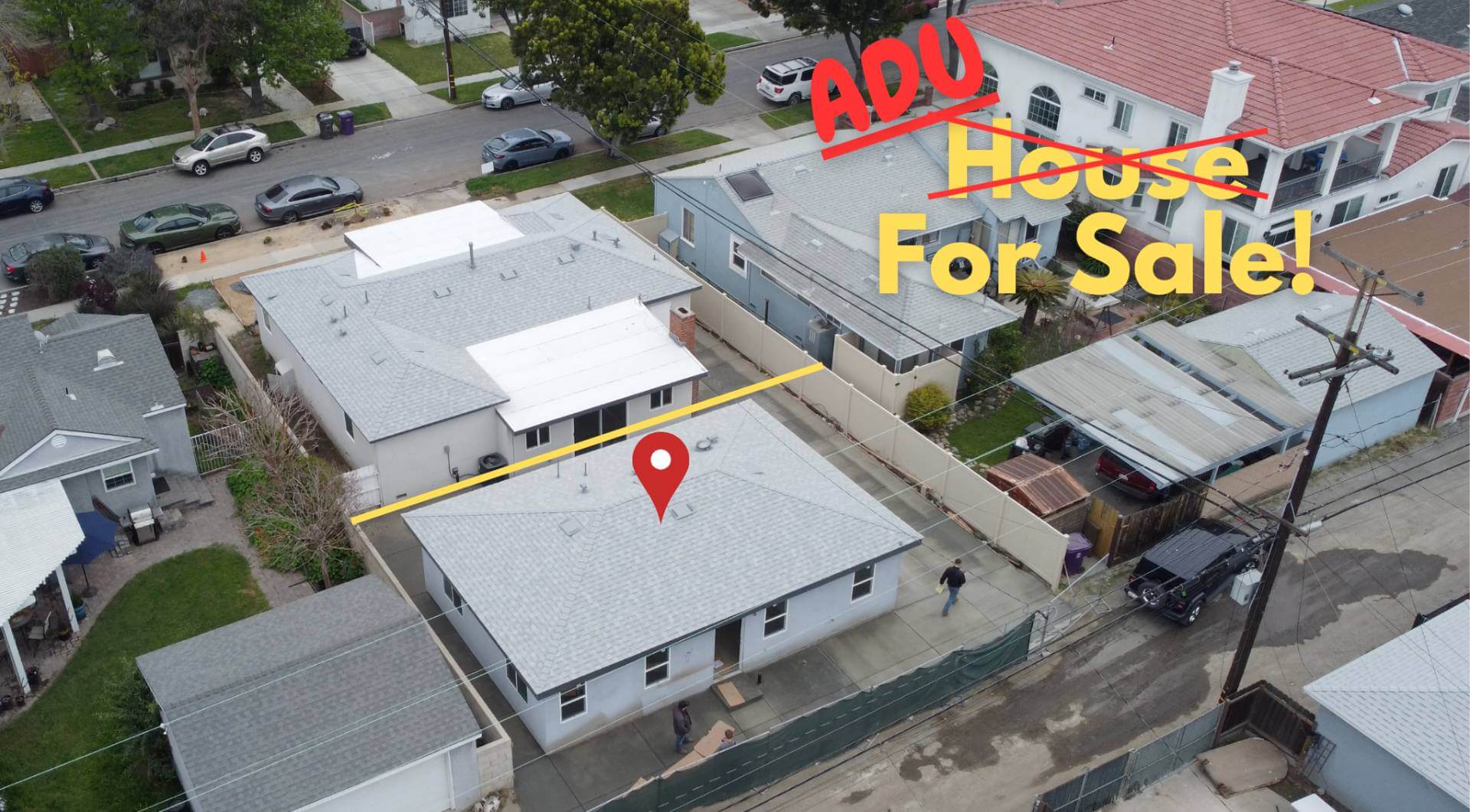
    Since their inception, existing law in California has prevented accessory dwelling units from being sold separately for a primary dwelling unit. While ADU’s can make a ton of financial sense as rental units that are accessories to a primary residence, there is significant benefit for investors and entry level home buyers if ADUs are allowed to be sold separately. State lawmakers recognized these benefits and CA AB 1033 ADU was born.

    What is Assembly Bill 1033 ADU?

    AB 1033 California is a bill that would allow the sale and condo-ization of accessory dwelling units built on residential property. The bill would allow individual cities and counties to pass laws to allow accessory dwelling units to be sold separately from a primary residence.


    What is Condo-ization?

    When you think of condos you may think of larger residential buildings that were built with the purpose of being sold off as individual condo units. In reality, condo’s are less of a specific type of construction and more of a form of co-ownership.

    Condo-ization is not a new concept. Looking back at previous real estate cycles we have seen many types of properties converted into condos. Here in Long Beach we have seen periods of time where apartment buildings that were built to rent have been converted into condos. Condo-ization involves taking a single property and allocating ownership of separate units to different owners. This allows two or more distinct parties to legally own discrete parts of the same property without having to subdivide the land.

    Condo-izing an ADU mean that one party owns the primary residence and another party owns the ADU and the two parties have co-ownership of the land and common areas which would be managed by an HOA. In this scenario the ADU is considered separate property from the primary residence and can be sold and financanced separately.

    While almost every property could be condo-ized, often state and local regulations prevent this from happening. AB 1033 would eliminate restrictions at the state level and give power to local governments to allow ADU properties to be condo-ized.


    What are the potential benefits of Condo-ization?

    It’s no secret that housing prices in CA are some of the highest in the nation and it can be incredibly hard for first time home buyers to enter the market. ADUs are one of the most cost-efficient ways for mom and pop developers to add new units to the market and gently increase the density of residential neighborhoods. Over the last several years ADUs have been built to rent, which helps to alleviate the shortage of rental units in CA. AB 1033 could open up a reservoir of reasonably priced housing for entry level home buyers. According to an article from Business Insider, over 63,000 ADUs were built in California between 2018-2021.

    AB 1033 would also have major benefits for current homeowners who could use the proceeds from the sale of the ADU to cover the cost of construction and leave them with nice profits without having to become landlords. A condo-ized ADU could also have potential to be financed separately from the primary residence.


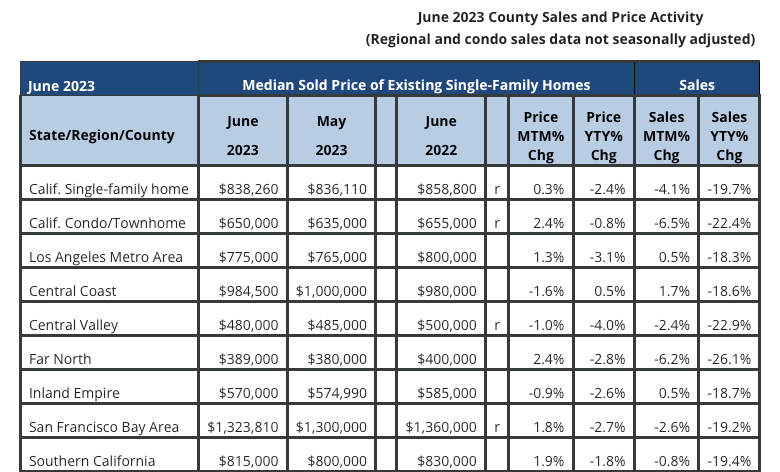
    According to data from the California Association of Realtors, the median price for a single family home in the LA Metro Area in June 2023 was $775,000 and the California median price for a condo or townhome came in at $650,000.

    ADU Condo-ization Outside of California

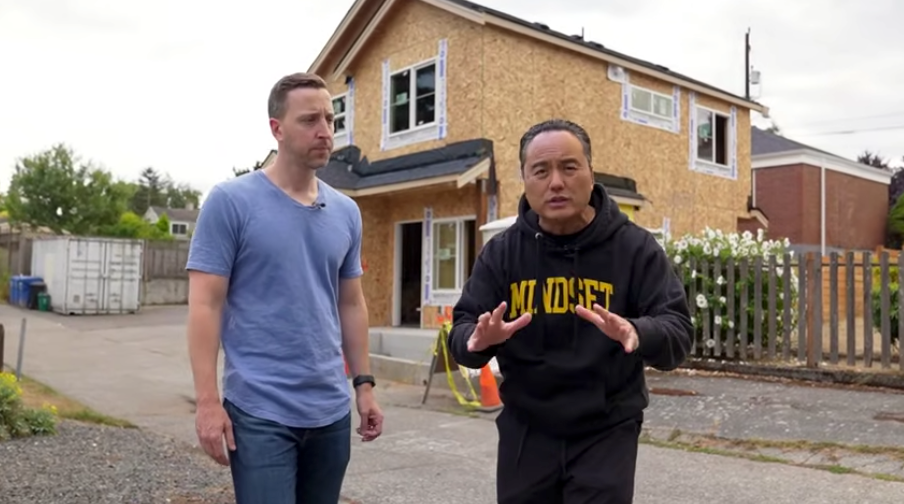
    Not only is AB 1033 realistic, but similar laws are already working in other parts of the US. Some notable markets where ADU condo-ization is taking place include Seattle, WA, Austin, TX, Portland, OR, and Princeton, NJ! Thatch Nugyen, a real estate developer and youtuber has been posting content about the benefits in Seattle Washington and has told investors in other states that condo-ization is the next logical step in markets where ADUs are already allowed. In a recent video, he highlights an ADU condo-ization project that one of his students completed and Thatch tells investors to get ready for laws like AB1033 to take effect and open up huge opportunities for mom and pop investors.


     AB 1033 Bill Progress

    As of September 11, 2023 the bill has passed in both the CA Senate and CA Assembly. The bill will be proofread and sent to the Governor for the final decision.  Track the bill progress here.


    Unlock New Investment Opportunities: ADU Sold Separately in California

    California’s new regulations on Accessory Dwelling Units (ADUs) present a game-changing opportunity for real estate investors. With the passage of Assembly Bill No. 1033, local agencies can now adopt ordinances allowing California sell ADU to be sold separately from the primary residence as condominiums. This opens the door to enhanced liquidity and flexibility, enabling investors to capitalize on the growing demand for affordable housing.

    By diversifying portfolios with separately owned ADUs, investors can maximize returns through individual sales or rental income streams. Whether you’re looking to expand your holdings or increase cash flow, this policy shift creates a new frontier for profitable investments in California’s thriving real estate market.

    Maximize Investment Potential with AB 1033 Ting

    Assembly Bill 1033 (AB 1033), championed by Assembly member Philip Ting, unlocks new opportunities for real estate investors in California. This groundbreaking legislation allows local agencies to adopt ordinances enabling the separate sale or conveyance of Accessory Dwelling Units (ADUs) as condominiums. For investors, this means increased flexibility and liquidity, as ADUs can now be sold independently from the primary residence, creating new revenue streams.

    Signed into law by Governor Gavin Newsom on October 11, 2023, and effective January 1, 2024, AB 1033 opens the door to higher returns while addressing California’s housing demand. This is the perfect time to capitalize on a booming market and diversify your investment portfolio.

Get exclusive Multifamily offers !